GET A QUOTE
Leave Your Message
0%

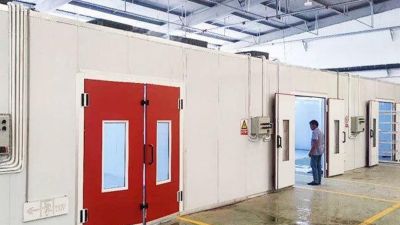
Picking the right Semi Downdraft Paint Booth in 2026 isn't just about price tags and outside dimensions. This guide walks through the practical stuff: airflow, filtration, lighting, construction, installation, and what it'll take to maintain it over the long haul. A dependable booth should keep air moving consistently across the vehicle. It should also help you get clean finishes, stay comfortable while you work, and keep production schedules predictable.

Not every booth is the right fit, though.

Experienced painters tend to look at the floor grates, filter access, door seals, and control panel before they even talk about add-ons. Those details shape how the booth performs day to day. A good semi-downdraft system pulls contaminated air down and toward filtered exhaust points. How well it works depends on booth size, fan capacity, filter condition, and whether it was installed correctly. So ask for measurable airflow data, service info, warranty terms, and realistic delivery timelines. Marketing talk by itself won't prove much.

The best pick really comes down to your workload, vehicle sizes, coating materials, available space, and how hands-on you want to be with maintenance. A compact booth might be fine for occasional projects. A larger one can cut down on repositioning and smooth out workflow. But bigger equipment usually means more planning and more operating resources. That trade-off is worth being honest about. A cheap purchase price can get expensive fast if filters, fans, lights, or repairs are hard to source. This buying guide looks at those factors with both experience and technical detail in mind. It also nudges you to check manufacturer docs and talk to qualified installers. No guide can replace a site visit. Still, asking the right questions can help you avoid costly mistakes and end up with a safer, more reliable place to paint.
2026 Best Semi Downdraft Paint Booth Buying Guide?

What Is a Semi-Downdraft Paint Booth and How Does It Work?

2026 Best Semi-Downdraft Paint Booth Buying Guide

What Is a Semi-Downdraft Paint Booth and How Does It Work?

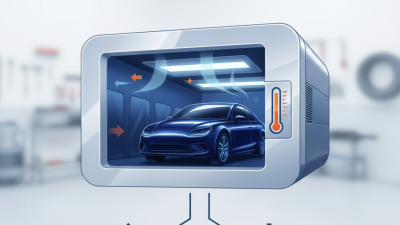
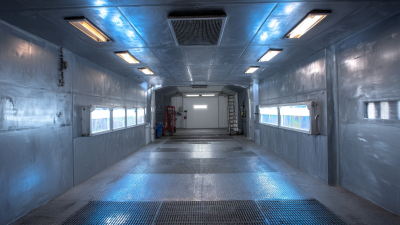
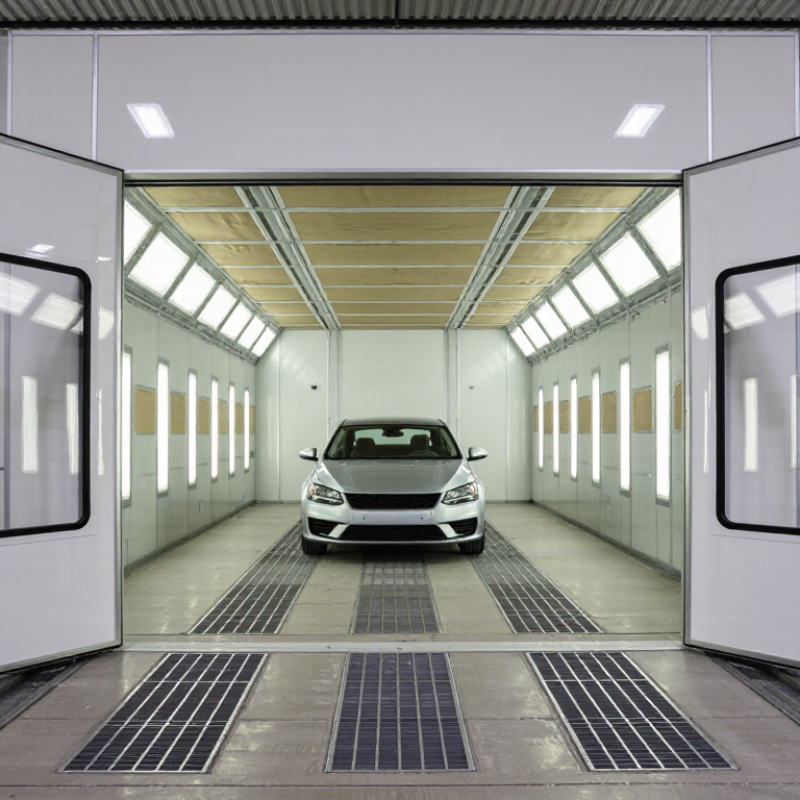
A semi-downdraft paint booth controls overspray by moving air from the ceiling toward the lower rear section. Fresh air enters through filtered ceiling inlets. It then travels downward and slightly backward across the vehicle or workpiece. The exhaust system pulls contaminated air through filters near the rear wall or floor.

Airflow matters.

This design combines vertical and horizontal movement. Unlike a full downdraft booth, it does not pull all air directly beneath the floor. That difference can reduce installation complexity and construction cost. However, the booth still needs correctly sized fans, sealed panels, balanced pressure, and suitable filters. Poor balance may create dead zones, uneven finishes, or visible dust on wet coatings.

A practical buying check should include airflow readings, filter access, lighting, noise, and cleaning requirements. Ask for documented performance data, not only attractive specifications. The booth should also match the coating process, room size, and daily workload. Applicable fire, electrical, ventilation, and worker-safety requirements must be verified locally. Never assume a larger fan automatically means better results. It may increase turbulence and operating costs. In real shop conditions, doors open, filters load, and routines become imperfect. Plan maintenance around those realities.

Which Booth Size and Configuration Fit Your Painting Operations?

Choosing a Semi Downdraft Booth starts with your largest routine workpiece, not your workshop’s empty floor area. Measure height, width, length, and door-opening clearance. Add roughly 900 millimeters around the work zone for operator movement and hose control. A tight booth may fit one panel, but it can restrict spray angles and increase rework.

Airflow must match the opening and coating process. For example, an 8-by-10-foot face at 100 feet per minute requires about 8,000 cubic feet per minute before filter loading and duct losses. OSHA 29 CFR 1910.94 and NFPA 33 identify ventilation, exhaust, and ignition-control requirements for spray operations. These references should guide the design review, not replace it. Check the actual fan curve.

Configuration depends on production rhythm. Choose a single-bay layout for occasional repair work and easier maintenance. Consider a longer booth when complete vehicles, cabinets, or assembled equipment need continuous movement. The U.S. EPA AP-42 compilation treats coating application as a significant emissions source, so filter access and exhaust planning deserve careful attention. The 2023 U.S. Bureau of Labor Statistics data also continues to show the importance of controlling workplace exposures. Bigger is not always better. A poorly balanced booth wastes energy, while an undersized booth creates turbulence, overspray, and uncomfortable working conditions. Our practical mistake was trusting nominal dimensions before checking real parts, carts, and lighting.

How to Compare Airflow, Filtration, and Overspray Control

Choosing a Semi Downdraft Spray Booth starts with airflow, not a glossy specification sheet. In this layout, filtered air enters through the ceiling and moves downward before exiting near the floor. That path helps carry overspray away from the operator and painted surface. During shop evaluations, I look for even airflow across the working zone, not only strong movement near the exhaust. Uneven flow can leave dry edges, trapped dust, or a cloudy finish. Measure it. A booth that feels powerful may still perform unevenly.

Filtration deserves the same attention. Check intake filters, exhaust filters, replacement intervals, and maintenance access. A fine intake filter protects the finish, while the exhaust stage captures paint particles before they spread through the workspace. Ask for documented airflow readings after filters become partially loaded. New filters can make performance look better than daily operation. That matters. Overspray control also depends on spray technique, coating volume, part placement, and booth balance. A technically correct booth cannot fix excessive atomization or poor positioning. This is where buying decisions become less certain.

Tips

Compare readings at several floor and ceiling points, then inspect filter seals by hand. Leave enough service space around filter doors. Keep a simple maintenance log. If the seller cannot explain pressure changes, pause before purchasing.

2026 Best Semi Downdraft Paint Booth Buying Guide? - How to Compare Airflow, Filtration, and Overspray Control

Comparison dimension Standard Semi-Downdraft High-Airflow Semi-Downdraft High-Solids / Clear-Coat Configuration Energy-Conscious Configuration Buying Interpretation
Typical internal working size 10 × 20 × 8 ft
(3.0 × 6.1 × 2.4 m)
12 × 24 × 9 ft
(3.7 × 7.3 × 2.7 m)
12 × 24 × 9 ft
(3.7 × 7.3 × 2.7 m)
10 × 20 × 8 ft
(3.0 × 6.1 × 2.4 m)
Select a booth that provides clearance around the largest part, including doors, mirrors, and spray-gun movement.
Airflow direction Supply air enters near the ceiling, moves downward and rearward, then exits through a rear exhaust plenum. The same semi-downdraft path with higher air volume and stronger exhaust capacity. Semi-downdraft path optimized for heavier overspray loading and clear-coat application. Variable-speed supply and exhaust airflow, normally used with a properly designed control system. Air should move away from the operator and toward the exhaust filters without creating turbulent recirculation.
Typical exhaust airflow Approximately 12,000–22,000 CFM
(20,400–37,400 m³/h)
Approximately 18,000–30,000 CFM
(30,600–51,000 m³/h)
Approximately 18,000–30,000 CFM
(30,600–51,000 m³/h)
Approximately 10,000–22,000 CFM
(17,000–37,400 m³/h), depending on operating mode
Actual airflow must be calculated from booth openings, face velocity, duct resistance, filter loading, and applicable local requirements.
Common design face-velocity reference About 100 ft/min
(0.51 m/s) at an open working face, where applicable
About 100–125 ft/min
(0.51–0.64 m/s), subject to the approved design
About 100–125 ft/min
(0.51–0.64 m/s), with attention to filter loading
Normally maintained within the approved operating range even when fan speed changes Do not choose a fan by CFM alone; inadequate or excessive velocity can reduce finish quality and increase energy use.
Supply-air filtration Pleated prefilter, commonly MERV 8–11 Prefilter plus final supply filter, commonly MERV 11–13 MERV 11–13 final filter recommended where finish quality is critical Low-pressure-drop MERV 8–13 filter selected for the fan and control strategy Higher efficiency improves cleanliness but can increase pressure drop; confirm the filter’s rated airflow.
Exhaust filtration Single-stage paint-arrestor media, approximately 98% overspray capture by rated test method Two-stage arrangement: primary paint-arrestor media plus secondary filter High-capacity primary media plus secondary filtration to manage heavier solids loading Low-pressure-drop staged filtration with differential-pressure monitoring Filter efficiency must be evaluated together with pressure drop, service life, disposal method, and local emission rules.
Optional final exhaust filter Usually not required for ordinary liquid-paint overspray capture unless specified by the permit or process Secondary filter may be used where emissions control requires it Secondary or final filter often considered for high-solids processes Use only when the added pressure drop is included in fan sizing HEPA filtration is not automatically required for every paint booth; use it only when the process and regulations justify it.
Overspray-control capability Suitable for routine repair, refinishing, and moderate production volume Better capture margin for larger parts and higher spray-gun transfer rates Best suited to coatings that generate greater solids loading, provided filters are changed on schedule Consistent capture depends strongly on automatic airflow control and clean filters Overspray control depends on booth airflow, gun technique, coating solids, filter area, and maintenance—not airflow alone.
Pressure-drop monitoring Magnetic or digital gauge recommended Digital differential-pressure monitoring recommended Essential because high-solids overspray can load filters quickly Essential for automatic fan-speed adjustment and filter-change alerts A rising pressure drop indicates restricted filters and reduced airflow; establish documented change-out limits.
Fan and motor considerations Backward-inclined or other non-sparking exhaust fan, sized for system resistance Higher-capacity fan with sufficient static-pressure reserve Fan selected for additional filter loading and duct resistance Variable-frequency drive with approved controls and minimum-airflow safeguards Check motor enclosure, electrical classification, fan certification, temperature rating, and service access.
Best-fit application General automotive and industrial refinishing with moderate daily use Large vehicle panels, frequent production, or operations needing stronger capture High-solids coatings, clear coats, and processes with heavier filter loading Facilities prioritizing lower idle energy use while maintaining compliant airflow Choose based on part size, coating type, operating hours, permit limits, and maintenance capacity.
Reference notes: Airflow figures are representative design ranges for semi-downdraft booths, not certified product ratings. One cubic meter per hour equals approximately 0.5886 CFM. Final booth sizing, face velocity, exhaust discharge, electrical classification, fire protection, and filter requirements must be verified against the applicable local codes, permits, and coating process.

Which Safety and Compliance Features Should Buyers Prioritize?

When evaluating a 2026 Semi Downdraft paint booth, buyers should treat safety documentation as seriously as airflow capacity. Ask for tested airflow data, fire protection details, and electrical classifications. Verify that filters are accessible without standing inside the booth. A pressure gauge should be visible from the operator’s position. Clear alarms matter.

Look closely at ventilation performance. Overspray should move downward and away from the breathing zone, not collect around the painter’s ankles. Inspect the intake path, exhaust fan, ductwork, and emergency shutoff controls. Guards should prevent contact with moving parts. Lighting should provide even visibility without creating heat concerns. Small design choices can prevent large problems.

Compliance depends on the installation location, building structure, and materials being sprayed. Request manuals, maintenance schedules, inspection records, and certification documents before paying a deposit. Confirm requirements with qualified local safety professionals and the relevant authority. Standards can change. I have seen buyers focus on booth size while overlooking replacement filter access and grounding details. That mistake becomes expensive during daily production. No booth is maintenance-free. Check whether staff can clean surfaces, test alarms, and record airflow without complicated procedures. A practical booth is safer because people are more likely to maintain it correctly.

How to Evaluate Energy Use, Lighting, Noise, and Daily Usability

Choosing a semi downdraft paint booth in 2026 means examining the working day, not just airflow ratings. In real shops, energy costs often rise during curing, lighting, and repeated fan starts. Ask for measured airflow at the filter, motor power, and standby consumption. A low-wattage fan may still work hard if filters clog quickly. That detail is easy to miss.

Test lighting with a metallic panel before purchasing. Even, high-color-rendering light reveals dry spray, pinholes, and uneven coverage. Place fixtures outside the contaminated airstream when possible. This simplifies cleaning and reduces maintenance risk. Noise deserves a practical test. Stand inside the booth while the fan runs. If conversation becomes difficult, daily fatigue may follow. Request sound data at the operator’s position, not only near the motor. Numbers can look reassuring. Your ears may disagree.

Daily usability depends on filter access, door movement, floor cleaning, and control placement. A technician should replace filters without climbing over equipment or wearing awkward protective gear. Check whether lighting, fan controls, and alarms remain readable through dust and overspray. I prefer simple controls with clear status indicators. Touchscreens can be attractive, but gloves and residue expose their weaknesses. I have also learned that “easy maintenance” needs proof: ask to see the service steps. Leave room for doubt. A booth that saves ten minutes per shift may justify higher energy efficiency, but only if operators actually use its controls correctly.

What Installation, Maintenance, and Service Costs Should You Expect?

Installation, maintenance, and service costs often matter more than the purchase price of a Semi Paint Booth. A typical installation may require ventilation work, electrical connections, lighting, ducting, and floor preparation. Local permits and safety inspections can add unexpected charges. I have seen early budgets fail because they ignored roof access and delivery space. Measure both before ordering. Installation labor may range from a few thousand dollars to much more for complex facilities.

Maintenance is usually predictable when scheduled properly. Replace filters when airflow drops, not only when they look dirty. Inspect belts, fans, lights, seals, and control panels every month. Keep records with dates, pressure readings, and replaced parts. Annual service should include airflow testing and electrical checks by qualified technicians. Emergency repairs cost more. Downtime costs even more. My earlier estimates were too optimistic when spare filters were unavailable.

Tips: Request a written service schedule before purchase. Ask what labor, travel, and replacement parts cost. Confirm technician response times in writing. Leave clear access around fans and filters. A small mistake here can become expensive. Choose washable surfaces and accessible components. Review the budget after installation, because real operating costs may differ from the original forecast.

2026 Best Semi Downdraft Paint Booth Buying Guide

Expected Installation, Maintenance, and Service Costs

Typical planning ranges for a semi-downdraft paint booth are shown in U.S. dollars. Installation includes booth assembly, basic electrical work, exhaust connection, and commissioning. Annual costs cover preventive maintenance, service repairs, and filters or other consumables. Actual pricing varies by booth size, local labor rates, code requirements, facility conditions, and ventilation scope. Booth purchase price, taxes, building modifications, and permits are excluded.

How Precision Industrial Spray Booths Deliver Superior Coating Performance and Quality Finishes

For manufacturing facilities in China, superior coating performance begins with a precisely engineered industrial spray booth. A controlled spraying environment helps maintain consistent airflow, stable temperature, and balanced humidity, reducing defects such as uneven coverage, overspray, bubbling, and surface contamination. Precise temperature control supports reliable curing, while powerful ventilation removes airborne particles and coating vapors from the working area. Advanced filtration further improves air cleanliness, helping each finish achieve a smooth, uniform appearance across different production requirements.

Built for demanding factory conditions, this professional spray booth combines robust construction with intelligent control systems that simplify daily operation. Adjustable settings allow operators to optimize spray conditions for automotive components, furniture panels, metal parts, machinery, and other industrial products. Efficient airflow management promotes better material transfer and can help reduce coating waste, while durable panels and dependable equipment support long-term use. With safety-focused design, stable performance, and flexible configuration options, the booth provides suppliers and factories with a practical solution for maintaining high finishing standards and improving production consistency.

FAQS

How should I choose the correct booth size?

Measure your largest routine workpiece, including its height, width, and length. Add about 900 millimeters around it for movement, hoses, and spray angles. Check door clearance, carts, and lighting. Empty floor space can mislead you.

What happens if the booth is too small?

A tight booth may restrict spray angles and operator movement. Overspray can collect near edges. Rework may increase. That gets expensive.

How can I estimate the required airflow?

Multiply the opening area by the target air velocity. An 8-by-10-foot opening at 100 feet per minute needs about 8,000 cubic feet per minute. Allow for filter loading and duct losses. Then verify the actual fan curve.

Should airflow feel strong everywhere?

No. Even airflow matters more than a powerful sensation. Check several floor and ceiling points. Uneven flow may cause dry edges, dust, or cloudy finishes. A booth can feel powerful and still perform poorly.

Which booth configuration suits different production needs?

A single-bay layout suits occasional repair work and simpler maintenance. A longer booth supports vehicles, cabinets, or assembled equipment moving continuously. Choose based on production rhythm. Bigger is not automatically better.

What filtration details should I compare?

Review intake filters, exhaust filters, replacement intervals, and access space. Fine intake filters help protect the painted surface. Exhaust filters capture airborne paint particles. Ask for readings after filters become partly loaded.

How can I control overspray effectively?

Keep parts positioned within the main airflow path. Use suitable coating volume and controlled spray technique. Inspect filter seals by hand. The booth cannot correct excessive atomization.

What maintenance practices help preserve performance?

Leave clear service space around filter doors. Record pressure changes and filter replacements in a simple log. Inspect seals, airflow, and visible overspray regularly. I once trusted nominal dimensions too much. Real parts changed the decision.

Conclusion

Choosing the best Semi Downdraft Paint Booth in 2026 requires more than comparing price and exterior appearance. Buyers should first understand how the booth draws contaminated air downward and rearward, then select a size and configuration that match vehicle dimensions, production volume, workflow, and available facility space. Airflow performance, filter quality, overspray control, and balanced ventilation are essential for achieving consistent finishes while maintaining a cleaner work environment. The booth should also include practical safety features, reliable lighting, clear visibility, and controls that support compliant operation.

A complete purchasing evaluation should consider energy consumption, operating noise, access convenience, and daily cleaning requirements. Buyers should also estimate installation needs, ducting, electrical preparation, filter replacement, inspections, routine maintenance, and long-term service expenses. Comparing total ownership costs instead of focusing only on the initial purchase price can help identify a booth that delivers dependable performance, efficient operation, and sustainable value for different painting businesses.
Maverick

Maverick

Maverick is a dedicated marketing professional at Jinan Xinaoxin Coating Equipment Co., Ltd., a company established in 1998 that specializes in providing comprehensive automotive services. With a strong focus on the design, production, sales, installation, and after-sales service of automotive......
Previous Why Choose a Spray Booth for Cars?