- Home
- Products
- News
- About Us
- Contact Us
Leave Your Message
You know, China’s automotive refinishing industry is really shifting gears—becoming way more tech-savvy, safety-focused, and driven by data. If you've been following the scene, you’ll notice reports from places like Grand View Research and Fortune Business Insights highlighting steady growth in automotive coatings, repair services, and finishing equipment that meets strict standards. That means there’s a pretty solid demand for reliable Automotive Spray Booth systems—especially in body shops working with electric vehicles or those high-volume repair shops that need speed and quality.
Now, any seasoned manufacturer of these spray booths knows it’s not just about having a shiny, well-built box. Things like airflow balance, filtration efficiency, curing temperature, lighting, energy consumption, and how easy it is to do maintenance—all of these little details really impact the final paint job. Steve Kline, who’s the President at Global Finishing Solutions, put it pretty well when he said, “There’s no one-size-fits-all in finishing.” That’s a good reminder when you’re comparing manufacturers in China.
In this guide, we’re taking a look at China’s Top 10 Automotive Spray Booth Makers using some pretty practical criteria—think engineering experience, how big their factories are, product certifications, how much they export, their ability to customize, after-sales support, and real-world installation track records. Plus, reports from MarketsandMarkets and QYResearch are pointing out that buyers are increasingly eyeing efficiency and environmental friendliness too.
But hey, rankings can be tricky. Some manufacturers might boast impressive specs but lack real-world proof to back up their claims. Others might offer the best prices but only have mediocre technical support. So, if you’re making a choice, make sure to check airflow test results, filter specs, control systems, warranty details, and actual project references. Trustworthy companies are upfront about their product limitations—not hiding behind hype. That’s where we start when comparing options.
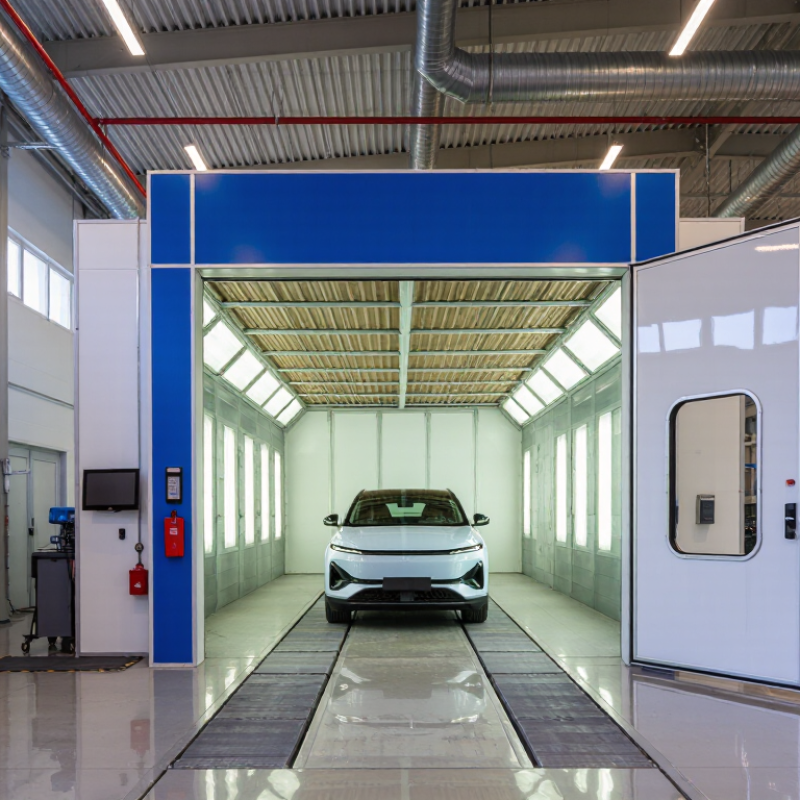
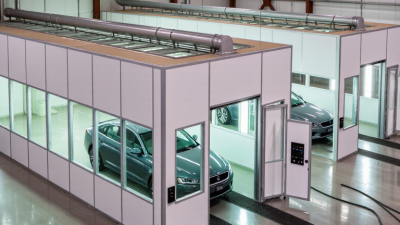
A top Automotive Paint Spray Booth manufacturer does more than supply a metal enclosure. It engineers stable airflow, safe lighting, reliable filtration, and practical maintenance access. In real workshops, a clean finish depends on details: even air movement, sealed doors, and measured pressure. The U.S. Environmental Protection Agency’s AP-42 guidance identifies surface coating as a significant source of volatile organic compound emissions. Therefore, serious suppliers design ventilation around controlled capture, not only appearance. Energy performance also matters. The International Energy Agency reports that industry uses about 37% of global final energy. Efficient fans, smart controls, and heat recovery can reduce operating waste. However, claimed savings need field testing.
Tips: Ask for airflow test records, filter replacement intervals, noise data, and documented commissioning procedures. Request references from workshops with similar vehicle volumes. A credible supplier should explain limitations clearly. That honesty is useful.
Experience becomes visible after installation. Strong manufacturers provide operator training, spare-part planning, and responsive technical support. They should understand paint curing, overspray behavior, winter temperatures, and daily cleaning routines. ISO 9001-based quality systems can support consistency, but certification alone proves little. Installation drawings, calibration records, and service response times matter more. Some suppliers still underestimate local conditions, especially dust, humidity, and unstable power. That is a weakness worth questioning. Airflow may look correct during commissioning, then drift months later. Scheduled verification is essential. Performance should be documented, not assumed.
| Rank | Top-Supplier Evaluation Dimension | Typical Technical Benchmark | Evidence a Buyer Should Request | Why It Matters |
|---|---|---|---|---|
| 1 | Safety and Code Compliance | Design should address applicable requirements such as NFPA 33, OSHA 29 CFR 1910.107, and local electrical and fire codes. | Code-compliance statement, risk assessment, electrical-area classification, and inspection documentation. | Reduces fire, explosion, worker-safety, and approval risks during installation and operation. |
| 2 | Controlled Airflow Performance | Many open-face refinishing booths are designed around approximately 100 ft/min (0.51 m/s) face velocity; the final value depends on booth configuration, coating, and local code. | Factory airflow calculations, measured face velocity, pressure readings, and commissioning records. | Stable airflow improves overspray capture, finish quality, and operator protection. |
| 3 | Effective Overspray Filtration | A staged filtration system is commonly used, with intake protection and replaceable exhaust-media sections selected for the coating process. | Filter specifications, pressure-drop limits, replacement intervals, and disposal guidance. | Protects fans and ducts while helping maintain finish quality and compliant emissions control. |
| 4 | Hazardous-Location Electrical Design | Lighting, motors, switches, controls, and wiring must be selected and installed according to the hazardous-location classification created by spray operations. | Component certificates, wiring diagrams, grounding details, and interlock test results. | Appropriate electrical design limits ignition sources inside or near the spray area. |
| 5 | Curing and Temperature Control | Automotive refinishing bake cycles commonly operate around 140–180°F (60–82°C), subject to the coating manufacturer’s technical data sheet. | Temperature uniformity test, burner or heater safety controls, cycle records, and over-temperature protection. | Consistent curing supports coating performance while reducing rework and energy waste. |
| 6 | Energy-Efficient Air Management | Variable-speed fans, automatic mode selection, insulated panels, and controlled fresh-air or recirculation strategies are common efficiency measures. | Energy calculations, fan curves, control sequences, insulation data, and operating-mode descriptions. | Lowers heating, ventilation, and operating costs without compromising safety. |
| 7 | Booth Construction and Maintainability | Durable, cleanable wall panels, sealed joints, protected lighting, accessible filters, and serviceable fan and heater assemblies are preferred. | Material specifications, panel drawings, maintenance clearances, cleaning instructions, and spare-parts lists. | Improves service life, cleanliness, uptime, and long-term maintenance access. |
| 8 | Project Customization Capability | A qualified supplier should adapt booth dimensions, door configuration, airflow direction, heating method, lighting, and controls to the facility layout. | General-arrangement drawings, utility schedules, foundation requirements, and documented design revisions. | Proper integration avoids installation conflicts and maximizes usable production space. |
| 9 | Testing, Commissioning, and Training | Commissioning should verify airflow, pressure, temperature, lighting, alarms, emergency stops, heater shutdown, and filter monitoring. | Factory acceptance test, site acceptance test, operator training records, and maintenance schedules. | Confirms that the installed booth performs as designed before production begins. |
| 10 | After-Sales Support and Documentation | A professional supplier provides manuals, electrical drawings, recommended spare parts, filter references, troubleshooting procedures, and accessible technical support. | Service response process, warranty terms, parts availability statement, manuals, and preventive-maintenance plan. | Reliable support reduces downtime and helps maintain safe, compliant performance over the equipment lifecycle. |
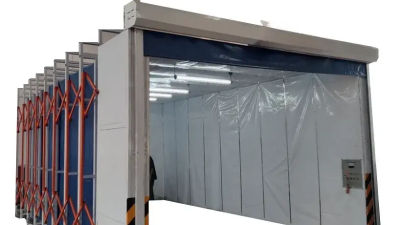
Retractable Paint Booths from China offer a practical way to create a controlled painting area without permanently dedicating valuable floor space. Designed to extend when work begins and retract when the job is complete, these modular systems can help automotive repair shops, industrial facilities, and custom vehicle finishing centers use their workspace more efficiently. Their adaptable layout makes them suitable for operations with changing project sizes and workflow needs.
Built for regular professional use, a retractable booth combines a durable structure with ventilation and filtration components that help manage airborne particles and maintain a cleaner working environment. Precise control systems support consistent operating conditions, while advanced purification technology helps capture paint-related contaminants. Together, these features contribute to a safer, more organized setting for technicians and equipment.
Manufactured in China by specialized suppliers, these space-saving booths can be configured to suit different applications and available shop layouts. Their extendable design supports smoother movement between painting and other tasks, reducing the need for a fixed, full-size enclosure. For businesses seeking a flexible solution, a retractable paint booth can bring together efficient space use, dependable performance, and a professional finish area.
It should deliver even airflow, sealed doors, safe lighting, and practical access for maintenance. A metal shell is not enough.
Request airflow test records and commissioning details. Ask where readings were taken, including near vehicle doors and wheel arches.
Clogged filters can disrupt airflow and affect finish quality. Pressure sensors may warn technicians early, but readings still need checking.
Variable-speed fans, efficient controls, and heat recovery can help. Ask for field-tested results; projected savings alone may disappoint.
The supplier should verify airflow, temperature, and controls on site. Clear records matter. Assumptions are risky.
Well-placed LED lighting can show color variation, dry spray, and missed spots. Technicians still need to inspect the panels carefully.
No. Robotic applicators can support production, but poorly calibrated sensors may mislead the process. Human checks remain useful.
Ask about dust, humidity, winter temperatures, and power stability. These details can change booth performance over time.
Ask for filter intervals, noise data, service response times, and references from similar workshops. Brochures rarely show the whole picture.
China’s automotive spray booth manufacturing industry has developed rapidly through advances in engineering, automation, energy efficiency, and environmental control. A leading Automotive Spray Booth Manufacturer is evaluated not only by production capacity, but also by booth design, airflow consistency, filtration performance, safety features, durability, and the ability to meet different workshop requirements. Modern systems may include intelligent temperature and humidity control, efficient lighting, advanced filtration, and energy-saving air circulation technologies that support stable finishing results.
This article introduces the development of the industry and profiles ten representative Chinese manufacturers without focusing on brand promotion. It also compares common product types, including open, enclosed, industrial, commercial vehicle, and customized spray booths, along with their applications in vehicle refinishing and industrial coating. Buyers can learn how to assess manufacturing quality, technical certifications, customization capabilities, installation support, warranty policies, spare parts availability, delivery schedules, and overall pricing. These factors provide a practical framework for selecting a reliable supplier for long-term operational needs.