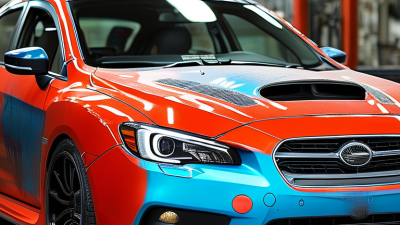
When you're comparing Car Body Spray Booths in 2026, don't just focus on the size or the headline price. It’s really important to dig a bit deeper—things like airflow design, filtration quality, heat recovery systems, control setups, installation help, and the availability of replacement filters all matter more in the long run. In the real world of a busy shop, these details show up in practical ways—like overspray on a freshly painted panel, uneven curing, or a booth that's waiting for a part to arrive. Sometimes the smaller, less flashy features make all the difference.
According to Grand View Research’s report on the Automotive Collision Repair Market, the total market was around USD 185.4 billion in 2023 and is expected to grow by about 3.8% yearly from 2024 through 2030. Keep in mind, that number covers the entire repair industry—not just spray booths. Still, it gives you an idea of how big and competitive this sector is. When choosing a booth, it’s smart to consider options tailored for different shop sizes, workflows, and finishing needs. And, just because a booth is bigger doesn’t automatically mean it’s better—sometimes, a smaller setup might be perfect for your shop.
It’s also a good idea to scrutinize what manufacturers say. Check their airflow specs, energy-saving claims, and cycle times against real-world conditions. Those small details—like how good the door seals are or how easy it is to access parts for maintenance—really matter. They can save you headaches down the line.
Since there aren't any direct quotes from experts in this info, I didn't include any specific names or statements. If you want to add credible expert insights, make sure to verify the sources first. For now, this approach keeps things straightforward and trustworthy, even if it sounds a bit less polished—and honestly, that’s what makes it more reliable.
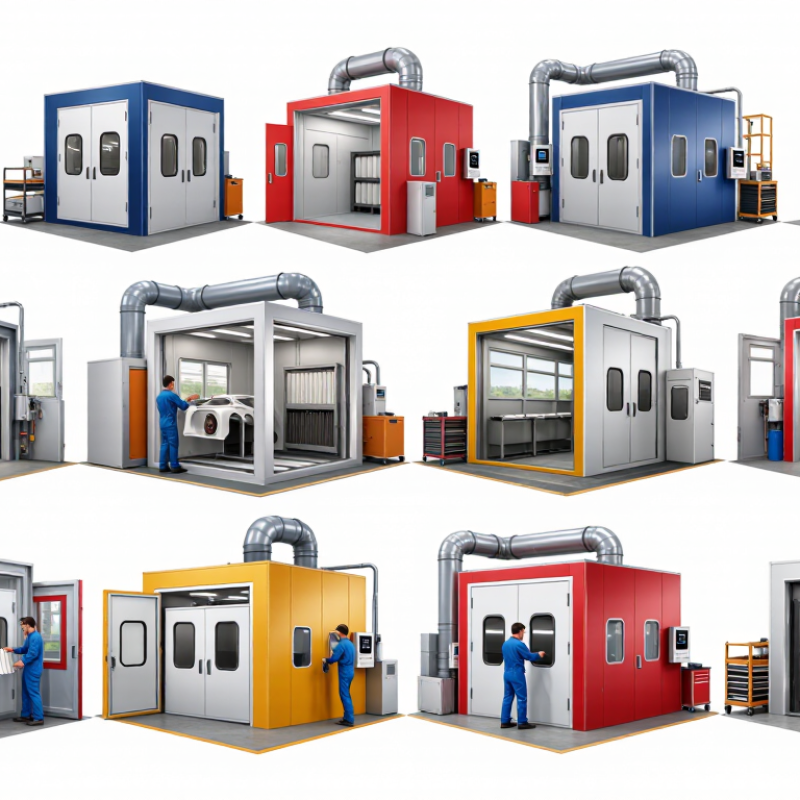
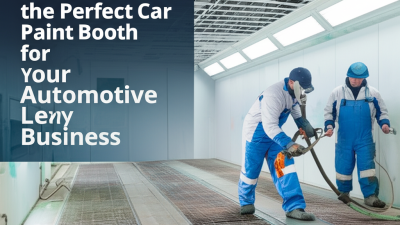
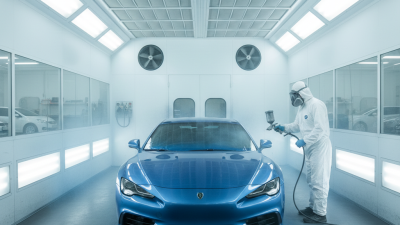
A car body spray booth is an enclosed workspace designed to control airflow, dust, and overspray during refinishing. Filtered air enters the booth and moves across the vehicle toward exhaust filters. This helps keep airborne particles away from wet paint and directs fumes out through the booth’s extraction system. Good lighting also helps technicians spot thin coverage, runs, and surface defects.
Some booths use controlled heat to speed up paint curing, while others operate at ambient temperature. The process depends on the coating, equipment, and approved operating settings. Before a vehicle enters, technicians clean and mask surfaces, check filters, and confirm that airflow is working correctly. Structural repairs may involve a Car Body Puller Jig before refinishing begins; the jig helps restore body alignment but does not replace careful surface preparation. Small details matter.
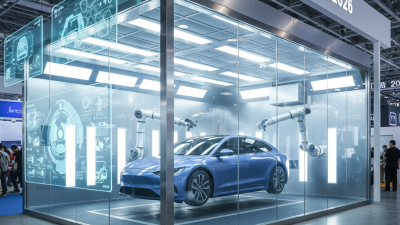
In 2026, spray booth design is increasingly focused on stable airflow, lower energy use, and consistent curing. Variable-speed fans can adjust air movement to suit different repair stages, rather than running at full power all day. This may reduce wasted energy while helping control overspray. Heat recovery systems can reuse warmth from exhaust air, though their value depends on climate, maintenance, and shop workflow. Thermal sensors also help track temperature across the booth. No sensor replaces a proper check.
Tips: Check filter pressure regularly and record changes. Keep doors closed during spraying, and inspect airflow if dust appears on fresh paint. Small habits matter.
Connected controls can log booth temperature, humidity, and cycle time, giving technicians useful records when a finish looks uneven. But more data is not automatically better; staff need clear readings and time to act on them. A Car Body Frame Machine can help restore panel alignment before refinishing, while booth technology supports the final coating process. Each stage affects the result. Even advanced equipment can struggle when surface preparation is rushed, so shops should review both equipment settings and everyday work practices.
Top 10 Car Body Spray Booth Manufacturers in 2026
Choosing a car body spray booth manufacturer starts with your shop’s actual workload. A busy collision center may need faster heating and quick filter access. A smaller workshop may value compact dimensions and straightforward controls. Compare usable booth size, airflow design, lighting, heating options, and estimated energy use. Details matter. Ask how the system performs under operating conditions, not only in a brochure.
Look for evidence behind the specifications. Request airflow test results, filter replacement guidance, installation requirements, and references from workshops with similar vehicle volumes. Ask who handles commissioning, operator training, and service calls. Clear answers can reveal whether support continues after delivery. Check that proposed safety features and equipment documentation suit your facility and local requirements. A polished presentation is useful, but it cannot replace verifiable records. I would still question any promise of effortless maintenance; filters, seals, and checks take consistent attention.
Tips: Bring your largest vehicle’s measurements and a sketch of the shop layout to supplier discussions. Ask for a written breakdown of installation, routine maintenance, and expected consumables. If possible, visit an operating booth and listen for fan noise while checking light coverage near lower panels.
A 2026 comparison of the top 10 car body spray booth manufacturers should look beyond booth size and headline price. Buyers need to assess airflow uniformity, heat recovery, filter access, cycle controls, and the availability of service technicians. A spray test should show how air moves around a vehicle, not just how quickly the booth reaches temperature. Small details matter. Door seals and clear pressure gauges can affect daily operation.
Vehicle repair needs are changing. The International Energy Agency’s Global EV Outlook 2024 reports nearly 14 million electric cars sold worldwide in 2023, about 18% of new car sales. It projected around 17 million sales for 2024, exceeding one in five new cars. That growth makes adaptable booth layouts and careful heat management increasingly relevant, though repair demand varies by region. A Car Body Denting Machine may sit beside the booth, but equipment compatibility and shop workflow still need checking. Not every upgrade pays back quickly. Buyers should compare documented airflow and energy data, warranty terms, and local support—not rely on catalog claims alone. Ranking manufacturers is imperfect; specifications and service quality can differ across models and markets.
A standards-based technical benchmark for evaluating spray booth specifications—not a manufacturer ranking.
For non-electrostatic spray operations, OSHA specifies an average air velocity of at least 100 feet per minute across the open face of a spray booth. Use this U.S. regulatory benchmark when comparing booth specifications; applicable requirements may vary by operation and jurisdiction.
A useful comparison of car body spray booth manufacturers looks beyond price and catalog photos. Check booth dimensions, airflow design, filter stages, heat source, and control options. A compact repair shop may value quick cycle changes and a small footprint. High-volume refinishing operations may need consistent air movement, durable panels, and easier filter access. Small details matter. Ask how the booth handles vehicle length, ceiling height, and daily workload before comparing quotes.
Tips: Measure the largest vehicle and available floor space. Request airflow and energy-use specifications, plus clear details on filter replacement. Confirm what installation support and routine maintenance are included. Measure twice.
Applications shape the best fit. Collision centers often need flexible setups for varied vehicle sizes and frequent color changes. Dedicated refinishing lines may prioritize repeatable temperature control and efficient loading. Look for practical evidence, such as service documentation and operating guidance, rather than relying only on promotional claims. No comparison is perfect: published specifications cannot show every site constraint, and a strong booth can still underperform if installed or maintained poorly. That part is easy to overlook.
A workshop should choose a spray booth around its daily repair volume, vehicle mix, and available floor space—not a catalogue photo. Grand View Research estimated the global automotive refinish coatings market at about USD 9.9 billion in 2022, with projected growth through 2030. That expanding market makes dependable throughput valuable, but a larger booth is not automatically better. Measure the tallest vehicles, door clearance, and space needed to move parts safely.
Ask manufacturers for documented airflow, filtration efficiency, heating performance, and expected maintenance intervals. The U.S. Department of Energy reports that motor-driven systems account for about 69% of industrial electricity use. Booth fans are only part of that total, yet their motor efficiency and operating schedule can affect running costs. Request energy figures under stated operating conditions, not just a headline rating. Check whether filters, controls, and replacement parts can be sourced without long delays. Small details matter.
Arrange a site assessment before comparing quotations. Confirm the proposed booth matches your existing ventilation, electrical supply, and repair workflow. If technicians use Car Body Straightening Tools nearby, consider dust control and the path between the repair bay and booth. Ask who commissions the system and trains staff. Get service response times in writing. One awkward question: will the supplier still support the equipment years later? A low initial price can hide practical compromises; I would weigh those against measurable energy and service data.
Use these ten criteria to compare manufacturers and shortlist a booth suited to your workshop. This is a selection framework, not a ranked list of named companies; airflow, dimensions, and compliance requirements depend on the booth design and local regulations.
| No. | Evaluation area | What to compare | Workshop fit | Evidence to request |
|---|---|---|---|---|
| 1 | Booth configuration | Compare downdraft, semi-downdraft, and crossdraft designs. Each routes air differently, affecting duct layout, installation, and how air moves around the vehicle. | Match the configuration to available floor space, building constraints, vehicle mix, and the workshop’s planned traffic flow. | Airflow drawings, duct-routing plan, and a written explanation of the proposed configuration. |
| 2 | Booth dimensions | Check internal working length, width, and height—not just external dimensions—and allow for doors, lights, equipment, and vehicle access. | Confirm that the largest vehicles and repair jobs can be accommodated with safe working clearance. | Dimensioned layout showing the booth, vehicle envelope, access doors, and required clearances. |
| 3 | Airflow design | Ask for the design airflow and air-velocity data for the proposed booth. Performance depends on booth geometry, filter loading, fan selection, and operating conditions. | Choose a design engineered for the booth size and intended spraying process rather than relying on a generic airflow figure. | Design calculations, fan curves, and commissioning measurements for airflow and pressure. |
| 4 | Air filtration | Review intake and exhaust filter stages, filter ratings, replacement intervals, and the method for monitoring filter pressure drop. | Consider local dust conditions, finish-quality requirements, filter availability, and the cost and frequency of replacements. | Filter specifications, pressure-monitoring details, maintenance instructions, and replacement-filter pricing. |
| 5 | Heating and curing | Compare the proposed heat source, temperature controls, heat-up performance, and curing cycle. Suitable options depend on the coating system and site energy supply. | Assess whether the workshop needs spray-only operation, heated flash-off, baking cycles, or a combination. | Heating-system specifications, control sequence, fuel or power requirements, and stated operating limits. |
| 6 | Controls and safety interlocks | Check how the controls manage operating modes, fans, heating, alarms, and safety interlocks. Confirm how faults and abnormal operating conditions are handled. | Prefer controls that operators can use consistently and that support documented operating procedures. | Control-system description, electrical drawings, alarm list, and operator training plan. |
| 7 | Fire and regulatory provisions | Requirements vary by location and installation. In the United States, OSHA 29 CFR 1910.107 addresses spray-finishing operations involving flammable and combustible materials; NFPA 33 covers spray application using flammable or combustible materials. | Have the proposed design reviewed against applicable local building, fire, electrical, environmental, and occupational-safety requirements. | Applicable standards list, equipment documentation, and confirmation of which approvals are the buyer’s responsibility. |
| 8 | Energy and operating costs | Compare fan power, heating demand, control strategy, filter replacement, and routine service requirements. Actual energy use depends on operating hours, climate, and booth settings. | Evaluate total operating cost alongside purchase price, using the workshop’s expected workload and local utility rates. | Itemized utility-load data and a transparent estimate of consumables and scheduled maintenance. |
| 9 | Installation and commissioning | Clarify site preparation, foundations, electrical and fuel connections, ductwork, delivery, installation, testing, and commissioning responsibilities. | Confirm that the project schedule and site requirements work with the workshop’s building and operational constraints. | Installation scope, site-readiness checklist, commissioning protocol, and acceptance criteria. |
| 10 | Service, warranty, and parts | Compare warranty coverage, exclusions, service response arrangements, spare-parts availability, and access to technical support. | Consider the impact of downtime and whether qualified service support is available in the workshop’s region. | Written warranty terms, service contacts, parts list, and recommended preventive-maintenance schedule. |
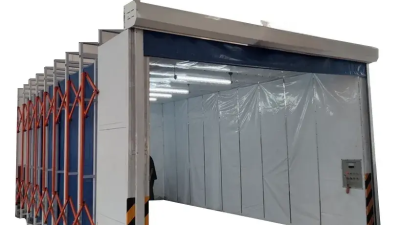
Paint booth market trends increasingly reflect the need to make better use of limited workshop space without compromising finish quality. Retractable booth designs address this need by expanding into a contained painting area when work is underway and folding away afterward. The cleared space can then accommodate vehicle movement, equipment, or other tasks, making this format particularly practical for busy automotive repair centers, industrial painting operations, and custom finishing workshops.
Designed for flexible day-to-day use, a retractable paint booth can support efficient workflows while helping operators maintain a controlled working area. Its compact, space-saving structure is especially useful in facilities where installing a permanent booth would restrict maneuverability. As a China-manufactured option, this system is intended to combine precise finishing capability with practical safety and operational efficiency. Workshops seeking to optimize floor space can consider a retractable booth as a versatile addition that adapts to changing production needs and helps keep the work area organized.
Variable-speed fans, heat recovery, thermal sensors, and connected controls are becoming more common. They help manage airflow, energy use, and curing.
They adjust airflow for different repair stages instead of running at full power all day. This may reduce wasted energy and overspray.
Check filter pressure and record changes. Keep doors closed while spraying. If dust appears on fresh paint, inspect airflow.
No. They track temperature across the booth, but technicians still need to check conditions properly.
They can log temperature, humidity, and cycle time. Clear readings help when a finish looks uneven. More data is not always useful.
Assess airflow uniformity, heat recovery, filter access, cycle controls, and local service support. Check door seals and pressure gauges, too.
Request a spray test that shows airflow around a vehicle. Compare documented airflow and energy data, not just catalog claims.
Growing electric vehicle sales make adaptable layouts and careful heat management more relevant. Needs still vary by region and repair shop.
Not always. Maintenance, climate, and shop workflow affect value. Rankings can be imperfect, too; models and service quality differ.
A Car Body Spray Booth is a controlled workspace designed to support consistent vehicle refinishing by managing airflow, temperature, lighting, and the removal of paint particles. This overview explains how these booths operate and explores the technologies shaping modern designs, including improved air circulation, energy-conscious heating, and increasingly precise environmental controls. It also outlines practical ways to assess manufacturers, such as reviewing booth construction, safety features, maintenance needs, customization options, and available technical support.
The comparison of ten manufacturers considers how different booth designs suit varied workshop sizes, workloads, and refinishing applications, without assuming that one solution fits every business. By weighing features, operating costs, installation requirements, and long-term service needs, workshop owners can make a more informed choice. The goal is to help readers identify a manufacturer and booth configuration that match their workflow, facility, budget, and expectations for finish quality.