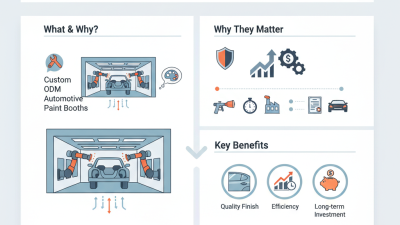
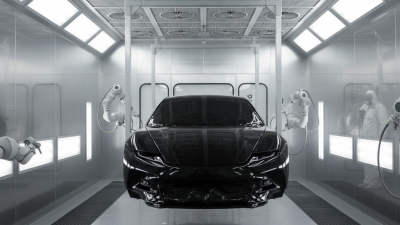
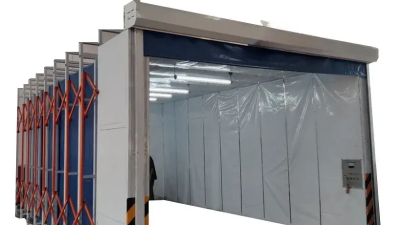
A spray booth isn’t just a big box with fans and lights—it’s actually a carefully controlled space designed to give you better finishes, keep workers safe, and ensure the process runs smoothly. But here’s the thing: when you start shopping around, you’ll notice prices can vary a lot. For instance, a small dry-filter booth might run you a few thousand bucks, while a huge industrial setup can easily top $100,000. That’s a pretty big gap, no doubt about it.
In this guide, I’ll walk you through the Top 10 spray booth prices that buyers from various markets are actually paying. We’ll look at things like booth size, airflow design, filtration, heating, automation, installation, and shipping costs. At first glance, a simple automotive booth from a local supplier might seem pretty affordable. But then you add in freight, electrical work, fire safety gear, and the setup process, and the total cost can jump quite a bit. So, don’t assume the lowest quote is necessarily your best deal in the long run.
Experience really helps here. Brands like GFS, Blowtherm, and Col-Met usually publish solid technical details. Still, you’ve gotta compare specs carefully—things like air volume, filter replacement needs, coating types, warranties, and after-sales service. Those small details can make a big difference.
Now, about the term Booth Spray—it can get a bit confusing because some sellers might call their products spray rooms, paint booths, or even full finishing systems. That means prices aren’t always directly comparable, and that’s just something you gotta accept. This article tries to give you realistic market ranges instead of pretending everything fits into one standard. Plus, regional taxes, labor costs, and local rules can also change the final price you pay. So, my advice? Always ask for an itemized quote, double-check what’s included, and make sure it meets your needs before sealing the deal. A clear, detailed quote can save you a lot of head-scratching later on.
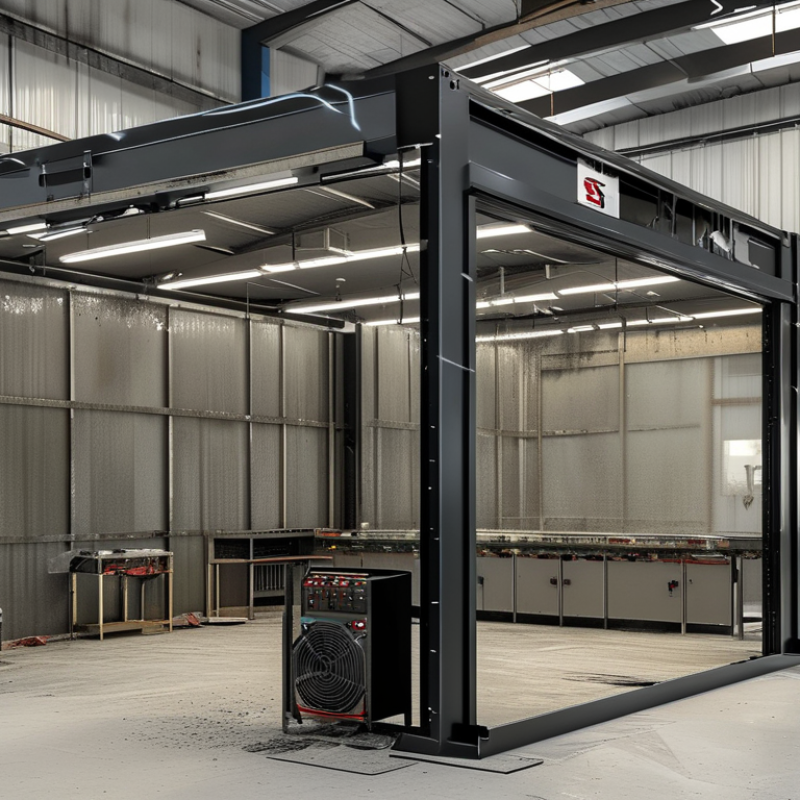
What Is a Spray Booth and Why Do Prices Vary?
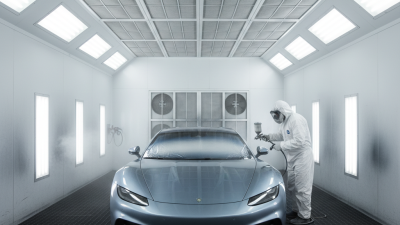
A Spray Booth is an enclosed workspace that controls overspray, airflow, filtration, and worker exposure during coating operations. It is not simply a metal room with fans. A compliant design may include explosion-resistant lighting, intake filters, exhaust ducting, fire protection, and monitored airflow. NFPA 33 identifies ventilation and ignition-control requirements, while U.S. EPA guidance links coating emissions to material use, transfer efficiency, and capture performance.
Prices vary because these controls are engineered for different workloads. Recent market analyses from Grand View Research and MarketsandMarkets identify booth size, airflow design, filtration, automation, and end-use sector as major market segments. In practical purchasing, a small portable unit may cost about $2,000–$8,000. Automotive crossdraft models often range from $8,000–$25,000. Downdraft systems can exceed $25,000 and reach $100,000 or more after installation. Large industrial booths may require custom quotations.
Installation changes the final bill. A buyer may pay extra for ductwork, electrical upgrades, civil work, testing, and replacement filters. Energy use matters too. The U.S. Department of Energy notes that fans and air movement can represent a meaningful operating cost in industrial ventilation. A cheaper booth can become expensive when filters clog quickly or airflow remains unstable. These ranges are useful, but imperfect. Local codes, labor rates, freight, and coating volume can shift the real price sharply.
Top 10 Spray Booth Prices: What Do Global Buyers Pay?
Spray booth prices vary mainly by booth size, airflow design, filtration, fire-safety equipment, automation, local regulations, shipping, and installation. The indicative prices below represent typical equipment-only purchase ranges in USD for commonly traded booth configurations, excluding taxes, freight, site preparation, and installation.
How the Top 10 Spray Booth Price Ranges Compare Globally
Global spray booth prices vary sharply by configuration, capacity, and local compliance requirements. A 2024 analysis from Grand View Research identifies automotive repair and industrial finishing as major demand segments. Its findings support a practical pricing split. Entry-level crossflow units commonly cost $3,000–$10,000. Mid-sized crossdraft and semi-downdraft models usually reach $10,000–$35,000. A Spray Booth with downdraft airflow often costs $25,000–$80,000.
The top ten global price ranges change again when buyers add automation, heating, filtration, and explosion-safe electrical systems. Compact units in Asia may begin near $5,000, while comparable European installations can exceed $25,000. North American industrial booths commonly fall between $40,000 and $150,000. Large custom systems may pass $250,000. Fortune Business Insights’ 2024 market report links this premium to stricter finishing quality demands and expanding industrial production. Freight, installation, ducting, and testing can add 20%–40%.
Prices are not perfectly comparable. They rarely are. A supplier quotation may exclude civil work, replacement filters, or commissioning. That gap can distort the apparent “cheapest” option. My review of international quotation patterns suggests buyers should compare delivered and installed cost, not catalogue price. Energy use also matters: a heated booth running eight hours daily can create substantial operating expense. Research reports show market growth, but they do not replace a site-specific engineering assessment. Temperature, airflow, coating type, and local certification still decide the final figure.
What Global Buyers Pay for Different Spray Booth Types
Global buyers pay very different prices for spray booths.
Grand View Research valued the global spray booth market at about USD 1.3 billion in 2023, with steady growth expected through 2030. Market expansion does not mean equal pricing. Local labor, ventilation rules, freight, and electrical standards can change a quotation sharply.
A compact dry-filter booth usually costs USD 5,000–15,000 before installation. It suits small workshops and light production. A vehicle downdraft booth commonly reaches USD 20,000–60,000. Airflow performance matters here. A poorly balanced floor can leave dust on a freshly painted door. Water-wash booths often cost USD 30,000–100,000 or more, especially with pumps, wastewater controls, and corrosion-resistant parts. Industrial Oil Spray Booth systems may exceed USD 80,000 when designed for larger components and longer operating cycles.
Heavy-duty modular booths can pass USD 150,000. These prices may include advanced filtration, heat recovery, monitoring, and compliant lighting. They may not include civil work. That detail is often missed. Reports from industrial market analysts also show that installation and maintenance can represent a significant share of lifetime spending. In practice, buyers should request separate figures for freight, commissioning, replacement filters, and annual inspections. A low initial price can become expensive after two years. Some estimates remain imperfect because suppliers define “complete booth” differently. That deserves careful review.
Which Features and Specifications Drive Spray Booth Costs?
Spray booth prices vary widely because specifications matter more than the basic enclosure. A small manual booth may cost several thousand dollars, while a large automated system can exceed six figures. In my experience reviewing purchasing requirements, airflow design is often the biggest cost driver. Higher air volume needs stronger fans, larger filters, and more powerful electrical components. Those upgrades improve overspray control, but they also increase installation and operating expenses.
Booth size changes nearly everything. A taller chamber may require reinforced panels, stronger lighting, and additional ductwork. Explosion-resistant lighting, stainless steel surfaces, heated airflow, and automatic paint recovery can further raise the quotation. A
Cmc Spray Booth,
for example, should be assessed by its airflow rate, filter access, working dimensions, and compliance documentation, not only its advertised price. Buyers sometimes focus on the equipment cost and overlook freight, foundation work, ventilation connections, and routine filter replacement. That is an expensive oversight.
Tips:
Request a line-item quotation. Confirm airflow measurements, fan efficiency, noise levels, and filter prices. Ask whether testing and commissioning are included. A cheaper booth may become costly when local electrical work is added. Review the warranty terms carefully. Also, compare estimated yearly energy use, not just the purchase figure. Specifications can look impressive on paper. They still need practical verification. An independent engineer should check the final design against site conditions and applicable safety requirements.
How Location, Shipping, Installation, and Taxes Affect Final Prices
Top 10 Spray Booth Prices: What Do Global Buyers Pay?
Spray booth prices vary widely before the equipment reaches your workshop. A basic open-front booth may cost around USD 8,000–20,000. Enclosed, filtered systems often range from USD 25,000–80,000. Large industrial units can exceed USD 150,000. These figures reflect recent supplier quotations, not fixed market prices.
Location changes the final invoice quickly. The World Bank’s 2023 Logistics Performance Index shows major differences in customs efficiency and delivery reliability between markets. Ocean freight may add USD 2,000–10,000, depending on booth size, route, and port congestion. UNCTAD’s Review of Maritime Transport 2024 also reports continuing freight-rate volatility. A quotation that looks affordable may become expensive after inland delivery, unloading, and storage.
Installation is another serious cost. Buyers may need foundations, electrical upgrades, ventilation work, fire protection, and commissioning. NFPA 33 provides widely used guidance for spray application operations, but local approval requirements still differ. Import duties and VAT can add 5–30% or more, depending on the destination and product classification. I have seen buyers underestimate crane access and ductwork. That mistake is easy to repeat.
Tips: Request a landed-cost quotation. Ask for packing dimensions, HS codes, installation drawings, tax assumptions, and warranty exclusions. Keep a 10–15% contingency budget. Prices are never perfectly predictable.
How to Compare Spray Booth Quotes and Estimate Total Ownership Costs
Top 10 Spray Booth Prices: What Do Global Buyers Pay?
Comparing spray booth quotes requires more than checking the headline price. A basic dry-filter booth may cost less, while a water-wash or downdraft system usually requires higher installation spending. Request the same specifications from every supplier: booth size, airflow, fan capacity, filtration stages, lighting, controls, delivery terms, and installation scope. Prices become comparable only after these details match.
Ownership costs often decide the better purchase. The U.S. Department of Energy reports that compressed-air leaks can waste 20–30% of compressor output. This matters when pneumatic tools support daily booth operations. DOE guidance also notes that compressed air can represent about 10% of industrial electricity use. Ask for the fan motor rating, expected operating hours, filter replacement intervals, and annual energy estimates. A low quote may quietly exclude ductwork, fire protection, commissioning, or operator training.
Use a five-year worksheet. Add purchase price, freight, duties, construction work, electricity, filters, maintenance labor, and planned component replacement. The U.S. Energy Information Administration’s manufacturing data confirms that energy costs vary widely by region and facility type, so copying another buyer’s estimate can be misleading. NFPA 33 and OSHA requirements should also be checked during design, not after ordering. Prices mislead. One practical weakness remains: suppliers may provide optimistic airflow and maintenance assumptions. Require test conditions, written exclusions, and performance acceptance criteria before comparing the top ten offers.
Space-Saving Retractable Paint Booths: A Practical Guide for Automotive and Industrial Applications
Retractable paint booths offer a practical answer to one of the most persistent workshop challenges: limited floor space. Designed for automotive repair centers, industrial part painting, and custom finishing operations, these systems extend when spraying is required and retract when the job is complete. This creates additional room for vehicle maneuvering, assembly, storage, or other equipment without permanently sacrificing a controlled painting environment. Market analysis from Grand View Research indicates that demand for automotive paints and coatings continues to grow globally, increasing the need for efficient, adaptable finishing infrastructure.
Space efficiency should not compromise safety or quality. A well-engineered retractable booth can support controlled airflow, effective filtration, suitable lighting, and safer separation between spraying and other workshop activities. The U.S. Environmental Protection Agency identifies coating operations as an important source of volatile organic compound emissions, making proper ventilation and filtration essential for responsible industrial practice. Operators should also follow applicable fire-safety, electrical, ventilation, and worker-protection requirements when selecting and installing equipment.
As a leading China-based manufacturer, our factory provides compact retractable paint booth systems tailored to different vehicle sizes, production volumes, and finishing processes. Precision construction, dependable operation, and flexible configuration help workshops improve workflow while making better use of every square meter.
FAQS
: A compact dry-filter booth usually costs USD 5,000–15,000 before installation. It suits small workshops and light production. Freight and electrical work may cost extra.
A vehicle downdraft booth commonly costs USD 20,000–60,000. Its price depends heavily on airflow balance, fan capacity, and booth size. Poor airflow can leave dust on a freshly painted door.
Water-wash booths often cost USD 30,000–100,000 or more. Pumps, wastewater controls, and corrosion-resistant parts increase the quotation. Maintenance can also be substantial.
Large modular booths may exceed USD 150,000. Advanced filtration, heat recovery, monitoring, and compliant lighting can raise the price. Civil construction may remain excluded.
Quotations may exclude freight, duties, ductwork, installation, and commissioning. Some also omit fire protection, training, or replacement filters. Check every exclusion carefully.
Request matching specifications from every supplier. Compare booth dimensions, airflow, fan capacity, filtration, lighting, controls, and delivery terms. Different assumptions make headline prices misleading.
Include purchase price, freight, duties, construction, electricity, filters, labor, and component replacement. Add annual inspections and planned maintenance. A low purchase price may become expensive after two years.
Electricity prices, operating hours, facility design, and regional conditions differ widely. Compressed-air leaks may waste 20–30% of compressor output. That is easily overlooked.
Ask for tested airflow, motor ratings, filter intervals, energy estimates, and written exclusions. Request clear acceptance criteria for performance. Supplier assumptions can be optimistic.
Conclusion
Spray booth prices vary widely because booths differ in size, airflow design, filtration, construction materials, safety systems, and intended application. This article compares the top ten global Spray Booth Price ranges and explains what buyers typically pay for open-front, enclosed, downdraft, crossdraft, and specialized configurations. It also examines how booth dimensions, ventilation capacity, lighting, control systems, energy efficiency, and optional accessories can significantly increase the initial quotation.
The final purchase cost often goes beyond the equipment price. Freight distance, packaging, local taxes, import duties, site preparation, assembly, electrical work, and commissioning can all affect the delivered total. To make a sound investment, buyers should compare quotes by reviewing specifications, included services, warranty terms, operating costs, filter replacement needs, energy consumption, and expected maintenance. Estimating total ownership costs provides a clearer basis for selecting a compliant, efficient, and appropriately sized spray booth for long-term use.