GET A QUOTE
Leave Your Message
0%

Thinking about getting an Automotive Paint Booth for your shop? Honestly, it can really change the game when it comes to refinishing work. Having a dedicated, controlled space for painting, curing, and inspecting makes a huge difference. Things like dust, airflow, temperature, and lighting become so much easier to control — and those tiny details actually matter a lot for the gloss, color accuracy, and how smooth the surface turns out.

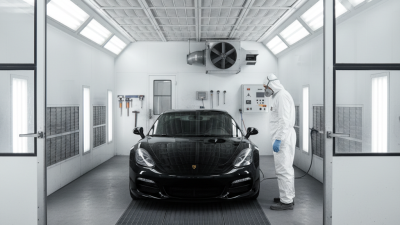
Imagine a technician getting a vehicle ready, working under bright, even lighting. The booth helps pull away overspray and keeps the environment cleaner, which makes applying paint so much easier. Plus, a stable airflow helps keep dust and airborne particles from landing on the fresh paint. Good filters aren’t just about the paint — they also protect your team and keep the workspace safe. All these little things add up to a more organized process and fewer touch-ups or mistakes.

That said, a booth isn’t some kind of magic fix. If you’re not preparing properly, mixing materials wrong, or neglecting maintenance, your finish can still suffer. Before you make any investment, it’s smart to think about the size of the booth, how the airflow is designed, how easily you can change filters, energy costs, and how busy your shop is. It’s also super important to follow manufacturer instructions and stay compliant with local safety rules. An experienced technician can often spot practical issues that product brochures just don’t mention.

Honestly, there’s no one-size-fits-all setup. The best Automotive Paint Booth for you depends on your workflow, the size and layout of your shop, your staff's experience, and what you’re aiming to achieve. When you pick the right system, it can help you be more consistent, waste less material, and boost your customer confidence. Plus, when managed well, it creates a safer, more professional working environment. Bottom line—taking the time to evaluate your needs over just going for the most expensive option really pays off.
Why Choose an Automotive Paint Booth for Your Business?

What Is an Automotive Paint Booth?

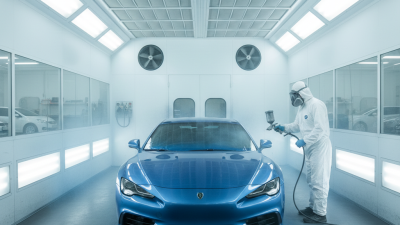
An Automotive Paint Spray Booth is an enclosed workspace designed for vehicle refinishing. It controls airflow, captures overspray, and helps keep dust away from wet paint. Most booths use filtered intake air and powered exhaust systems. This creates a cleaner, more predictable painting environment.

Inside, the technician prepares the vehicle, applies coatings, and monitors visibility during each pass. Good lighting reveals uneven coverage, dry spray, and small surface defects. A properly sized booth also supports safer work practices by directing vapors through suitable filtration and exhaust equipment. Local workplace and environmental requirements still matter. A booth does not replace training or protective equipment.

For a business, choosing the right booth can improve finish consistency and reduce cleaning time. It may also protect nearby tools, walls, and unfinished vehicles from airborne particles. In daily use, small details matter. Door seals, filter condition, airflow balance, and floor cleanliness can affect the final result. A neglected filter can quietly reduce performance.

I have seen operators blame the paint when airflow was the real problem. That mistake is easy to make. Regular inspections, documented maintenance, and trained technicians provide stronger reliability than equipment alone. Some shops may need a compact booth, while larger operations require greater clearance and airflow capacity. The best choice depends on vehicle size, production volume, coating types, available space, and local compliance rules.

How Does an Automotive Paint Booth Work?

Why Choose an Automotive Paint Booth for Your Business?

How Does an Automotive Paint Booth Work?

An automotive paint booth controls the painting environment from preparation to curing. It uses directed airflow to move overspray away from the vehicle surface. Filtered air enters through ceiling or wall inlets. It then passes across the vehicle and exits through filtered exhaust points. This airflow reduces airborne dust and helps create a more even finish.

The operator first cleans and masks the vehicle inside the booth. Proper preparation matters more than many new users expect. Paint is applied with a spray gun in controlled, overlapping passes. Exhaust filters capture paint particles before air leaves the working area. In many Automotive Paint Booth Systems , pressure gauges show whether filters need inspection or replacement. Small pressure changes can affect airflow quality. They are easy to overlook.

After spraying, the booth may switch to a curing cycle. Controlled heat or increased airflow helps coatings dry more consistently. Temperature sensors help prevent excessive heat on sensitive materials. The operator should check the surface before removing the vehicle. A finish can look ready while remaining soft underneath. I have seen rushed curing create rework later. That is an expensive reminder. Daily cleaning, filter checks, and airflow testing support reliable performance. Each booth behaves slightly differently, so practical testing should guide adjustments.

Which Types of Automotive Paint Booths Are Available?

Choosing an automotive paint booth starts with understanding airflow, not appearance. Different booth types solve different finishing problems. A downdraft booth pulls air from the ceiling toward a filtered floor. It helps carry overspray away from freshly painted panels. A side-downdraft booth moves air from the ceiling toward side exhaust walls. It often suits facilities with limited pit construction. A crossdraft booth draws air horizontally from front to rear. It can cost less, but may leave more airborne particles near the finish. Open-front booths support preparation and smaller jobs, though they offer less containment.

Tips: Check vehicle dimensions, daily workload, filter access, lighting, and available floor height. Ask an experienced installer to measure airflow and electrical capacity. Keep a written maintenance schedule. A clogged filter can quietly change spray behavior. Do not rely on visual cleanliness alone.

The right choice also depends on finish standards, energy use, and worker movement. Large repair centers may prefer downdraft or side-downdraft layouts for consistent refinishing. Smaller workshops may find crossdraft or open-front designs more practical. However, practical is not always cheaper over time. Poor airflow can increase rework, material waste, and drying delays. I have seen teams focus on purchase price and overlook filter replacement space. That mistake is easy to make. Confirm ventilation design, fire protection, lighting, and local requirements with qualified professionals before installation. A booth should fit the workflow, not force the workflow around it.

Why Choose an Automotive Paint Booth?

Different automotive paint booth designs support different repair volumes, finish-quality requirements, and vehicle sizes.

The chart uses an indicative 1–5 suitability score based on common industry applications. Downdraft and side-downdraft booths generally provide stronger overspray control and are often selected for high-quality refinishing. Crossdraft and open-front booths can be practical for smaller repair work, while larger commercial-vehicle projects may require a booth designed for greater vehicle access. Actual performance depends on booth dimensions, airflow design, filtration, installation, and local safety requirements.

What Business Benefits Does a Paint Booth Provide?

Why Choose an Automotive Paint Booth for Your Business?

An automotive paint booth gives repair shops a controlled space for consistent finishing. Clean airflow helps reduce dust, overspray, and uneven paint texture. A vehicle can leave the booth with a smoother, more professional appearance.

That consistency protects your business reputation. Customers notice small flaws on doors, bumpers, and polished panels. A reliable booth can also shorten drying and preparation time, helping technicians handle more vehicles each week. Better airflow and filtered exhaust support a cleaner workplace when the system is installed, inspected, and maintained correctly. An Outdoor Automotive Paint Booth may suit businesses with limited indoor space, but weather, ventilation, and local operating requirements need careful review. It is not a simple outdoor shortcut. Poor planning can increase delays and maintenance costs. I have seen efficiency claims fail when filters were ignored or staff lacked proper training.

Tips:

Check filters regularly, record airflow readings, and keep the booth floor free from dust. Train every technician to follow the same preparation steps. Use suitable protective equipment and documented maintenance routines. Measure job times before and after installation, rather than trusting assumptions. A clean booth also makes problems easier to trace. For example, a rough finish may point to contaminated air, rushed sanding, or incorrect spray technique. Reviewing these details helps owners control material waste, reduce rework, and make more confident equipment decisions.

How Does a Paint Booth Improve Safety and Compliance?

In a working repair shop, overspray can settle on floors, tools, and workers’ clothing. A properly designed automotive paint booth confines the spray area and directs contaminated air through suitable filtration. This reduces airborne particles near technicians and helps keep ignition sources away from flammable vapors. Visibility also improves when lighting is enclosed, clean, and evenly distributed. Small details matter. A dusty corner can affect both finish quality and housekeeping.

Safety depends on more than installing a booth. Operators need documented training and clear procedures for mixing, spraying, cleaning, and waste handling. Airflow gauges, filter inspections, grounding, emergency controls, and scheduled maintenance provide useful evidence during internal or regulatory reviews. Ventilation and exhaust arrangements should match the coating materials and the site. Local fire, environmental, and workplace rules can differ, so a qualified professional should verify the design before use. Paperwork alone cannot correct weak airflow.

From an operational perspective, consistent airflow makes defects easier to trace. It can also reduce rework caused by dust, uneven drying, or excessive overspray. However, a booth does not remove every hazard. Filters load up. Fans wear. Staff may skip checks during busy periods. That is where a realistic inspection routine matters. Record pressure readings, filter changes, training dates, and corrective actions. These records support accountability and reveal patterns that memory misses. A business should review them honestly, even when the results are inconvenient.

What Factors Should Businesses Consider Before Buying?

Before buying a Downdraft Automotive Paint Booth, businesses should measure their real workflow, not their hopes. Record vehicle height, repair volume, paint-cycle time, and available floor space. A booth that fits one large vehicle may reduce daily productivity. OSHA 29 CFR 1910.107 requires suitable mechanical ventilation during spraying and continued operation afterward. For open-face booths, the standard specifies an average airflow of at least 100 feet per minute. Test airflow after installation, not only during sales demonstrations.

Filtration and maintenance deserve equal attention. Check filter replacement intervals, pressure-drop indicators, fan access, and waste-handling procedures. The 2024 edition of NFPA 33 emphasizes fire-safe construction, ventilation, electrical controls, and clearance around spray areas. Local authorities may apply additional requirements. That uncertainty should be priced into the project. Energy consumption also matters. The U.S. Department of Energy notes that industrial fan systems can consume substantial electricity, especially when airflow is poorly controlled. Variable-speed controls may lower operating costs, but only when they match production demand.

Budget for training and inspections. A cheaper booth can become expensive through overspray, rework, or long drying cycles. I would not choose the largest model automatically. Bigger is not always better. Review coating types, filter efficiency, curing temperature, noise, and future service access. Some assumptions will be wrong; leave room to revise them after a trial workflow and an independent safety review.

Why Choose an Automotive Paint Booth for Your Business? - What Factors Should Businesses Consider Before Buying?

Decision Factor Typical Industry Reference Why It Matters to the Business Questions to Ask Before Buying
Booth Configuration Common options include crossdraft, downdraft, side-downdraft, and open-front preparation booths. The airflow design affects finish quality, overspray control, installation requirements, and operating cost. Which vehicle sizes and repair volumes will the booth handle? Is a separate preparation area required?
Airflow and Ventilation Many automotive booths use filtered mechanical airflow and dedicated exhaust systems; exact airflow must be designed for the booth dimensions and local regulations. Balanced airflow helps reduce dust, control overspray, and provide a more consistent paint finish. What airflow rate, exhaust arrangement, and make-up air system are specified? How will pressure balance be maintained?
Filtration Supply-air filters protect the paint area from airborne particles, while exhaust filters capture paint overspray before air is discharged. Effective filtration improves finish quality, protects ventilation equipment, and supports environmental compliance. Are replacement filters readily available? What are the filter grades, service intervals, and disposal procedures?
Heating and Curing Heating systems may use gas, electricity, or other approved energy sources. Curing temperature and time depend on the coating system and paint manufacturer’s instructions. Reliable temperature control can shorten turnaround time and improve coating performance. What heat source is suitable for the facility? Can the controls maintain the required temperature without overheating the vehicle or coating?
Booth Dimensions and Vehicle Capacity Passenger-car booths are generally smaller than booths designed for vans, trucks, buses, or specialty vehicles. Clearances must account for doors, mirrors, lifts, and technician movement. Correct sizing prevents workflow restrictions and avoids expensive structural changes later. What is the maximum vehicle length, width, and height? Is there enough space for loading, unloading, maintenance, and emergency access?
Lighting Automotive paint booths commonly use sealed, low-glare lighting designed to provide even illumination across vehicle panels. Uniform lighting helps technicians identify color mismatch, runs, sags, dry spray, and surface defects. Is the lighting suitable for color evaluation? Are fixtures sealed and rated for the booth environment?
Safety and Regulatory Compliance Requirements may cover flammable materials, electrical classification, ventilation, fire protection, worker exposure, emissions, and hazardous-waste handling. Compliance reduces safety risks, approval delays, regulatory penalties, and business interruption. Which local building, fire, environmental, and occupational-safety rules apply? Who is responsible for permits and inspections?
Energy Consumption Energy use depends on booth size, airflow volume, operating hours, climate, burner or heater efficiency, and whether heated make-up air is used. Energy efficiency directly influences the ongoing cost per repair and the facility’s operating emissions. What are the rated motor and heater capacities? Are variable-speed controls, heat recovery, or automatic shutdown functions available?
Maintenance Requirements Routine tasks include filter replacement, booth cleaning, fan and belt inspection, light maintenance, burner servicing, and safety-system checks. Planned maintenance protects finish quality and reduces unexpected downtime. What is the recommended maintenance schedule? Are service technicians, spare parts, and technical manuals available locally?
Workflow and Throughput A paint booth should be evaluated together with preparation, mixing, drying, inspection, and vehicle movement areas. A well-planned layout can reduce waiting time, unnecessary vehicle movement, and production bottlenecks. How many vehicles or panels must be processed per shift? Will the booth support future increases in repair volume?
Total Cost of Ownership The full cost includes purchase, delivery, installation, building modifications, permits, utilities, filters, maintenance, training, and eventual replacement. A lower purchase price may result in higher energy, maintenance, or downtime costs over the booth’s service life. What is included in the quotation? What are the estimated annual operating costs and warranty conditions?
Return on Investment A basic evaluation compares additional completed work, labor productivity, material savings, energy costs, maintenance, and financing against the total investment. The calculation helps determine whether the booth can support the business’s target payback period and profit margin. What additional jobs can be completed each month? What utilization level is required to cover fixed and operating costs?

Note: Performance figures, equipment specifications, permit requirements, and operating costs vary by booth design, coating system, facility, climate, and jurisdiction. Confirm all technical and regulatory details with qualified professionals and the applicable local authorities before purchase.

Space-Saving Retractable Paint Booths for Automotive Use: Quality Solutions from China Suppliers and Factories

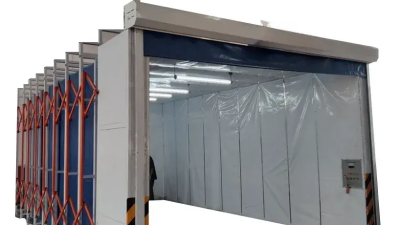
For workshops that need more productive floor space without compromising finish quality, a retractable paint booth offers a practical advantage. Designed for automotive repair centers, industrial part painting, and custom-finishing operations, the booth extends into a controlled spraying area and retracts when work is complete. This flexible layout can improve vehicle maneuverability, simplify material handling, and create room for additional equipment. The global automotive repair and maintenance services market was valued at approximately USD 750 billion in 2022, according to Grand View Research, increasing pressure on workshops to use every square meter efficiently.

Modern retractable booths from experienced China suppliers and factories are engineered around consistent airflow, filtered ventilation, durable frames, and accessible operating controls. These features help support uniform coating quality while reducing exposure to overspray and airborne contaminants. The International Energy Agency reported that global electric-car sales exceeded 14 million units in 2023, expanding the need for repair facilities capable of handling both conventional and electric vehicles in adaptable work environments.

For factory buyers, customization is another important benefit. Booth dimensions, extraction capacity, lighting, curtain materials, and control systems can be configured according to production volume and workshop conditions. Quality-focused manufacturers typically provide fabrication inspections, airflow testing, and installation guidance, helping customers integrate the booth into existing facilities while maintaining efficient painting cycles and safer daily operations.

FAQS

What is an automotive paint booth?

It is an enclosed workspace for vehicle refinishing. Filtered air enters while exhaust removes overspray and vapors. Clean walls and floors help protect wet paint from dust.

How does an automotive paint booth control airflow?

Air moves across the vehicle in a planned direction. Filtered intake air enters through ceiling or wall openings. Exhaust filters capture particles before air leaves the booth. Airflow balance matters more than many operators expect.

Why is proper preparation important inside the booth?

Technicians clean, mask, and inspect the vehicle before spraying. Dust, grease, or poor masking can ruin an otherwise careful finish. Preparation takes time. Skipping it often creates rework.

How does curing work after painting?

Some booths use controlled heat or increased airflow for drying. Temperature sensors help protect sensitive vehicle materials. A surface may look dry while remaining soft underneath. Rushing this stage can damage the finish.

What should a business measure before buying a booth?

Measure vehicle height, available floor space, repair volume, and paint-cycle time. Consider future vehicles, not only today’s workload. A compact booth may limit productivity. The largest model may waste space and energy.

How often should filters and airflow be checked?

Check filters according to pressure readings and maintenance schedules. Inspect door seals, fan access, floor cleanliness, and exhaust paths. Small pressure changes can weaken airflow. They are easy to miss.

What safety requirements should businesses consider?

The booth should provide suitable ventilation, safe electrical controls, and proper clearances. Local workplace and environmental rules may add requirements. Training and protective equipment remain necessary. The booth is not a complete safety solution.

Can an automotive paint booth reduce business costs?

It can reduce overspray, cleaning time, finish inconsistency, and nearby contamination. Energy use may increase when airflow is poorly controlled. Variable-speed controls can help match demand. Savings are possible, but not automatic.

Conclusion

An Automotive Paint Booth is a controlled workspace designed for applying paint and finishing products to vehicles while maintaining consistent air quality, temperature, and lighting. It works by drawing fresh air through filters, guiding airflow across the vehicle, and removing overspray, fumes, and particles through an exhaust system. Businesses can choose from different configurations, including crossdraft, downdraft, semi-downdraft, and side-downdraft booths, depending on their space, production volume, and finishing requirements.

Installing a suitable paint booth can improve coating quality, reduce contamination, increase workflow efficiency, and create a more professional working environment. It also supports safety and compliance by containing airborne particles and directing emissions through proper filtration and ventilation systems. Before buying, businesses should evaluate booth size, airflow design, energy use, maintenance needs, installation space, operating costs, and the type of vehicles or services they handle. A careful assessment helps ensure the booth delivers reliable performance and long-term value.
Maxwell

Maxwell

Maxwell is a dedicated marketing professional at Jinan Xinaoxin Coating Equipment Co., Ltd., a company established in 1998 that excels in providing comprehensive automotive services. With extensive knowledge of the company's products, he plays a pivotal role in promoting the brand's offerings and......
Previous Top 10 Spray Booth Prices What Do Global Buyers Pay?