
How Does a Compact Wheel Spray Booth Improve Rim Painting?
If wheel refinishing is part of your daily business, spraying rims in an open workshop can make dust, paint mist and uneven coverage harder to control. This compact wheel spray booth creates a dedicated 1.5 × 1.2 × 1.6m enclosed spraying area with paint mist extraction, filter paper and an electronic control system.
Why Use a Dedicated Spray Booth for Wheel Painting?
Painting alloy wheels looks like a relatively small job compared with refinishing an entire vehicle, but that does not mean the process is easy to control.
A wheel has spokes, recessed surfaces, curved edges and narrow areas that need consistent paint coverage from several directions. When spraying takes place in an open workshop, airborne dust, uncontrolled overspray and nearby repair work can interfere with the finish.
A dedicated wheel spray booth gives you a separate working area for this process.
Instead of spraying rims beside sanding equipment, mechanical repair areas or other workshop operations, you can move wheel refinishing into an enclosed chamber designed specifically for compact components.
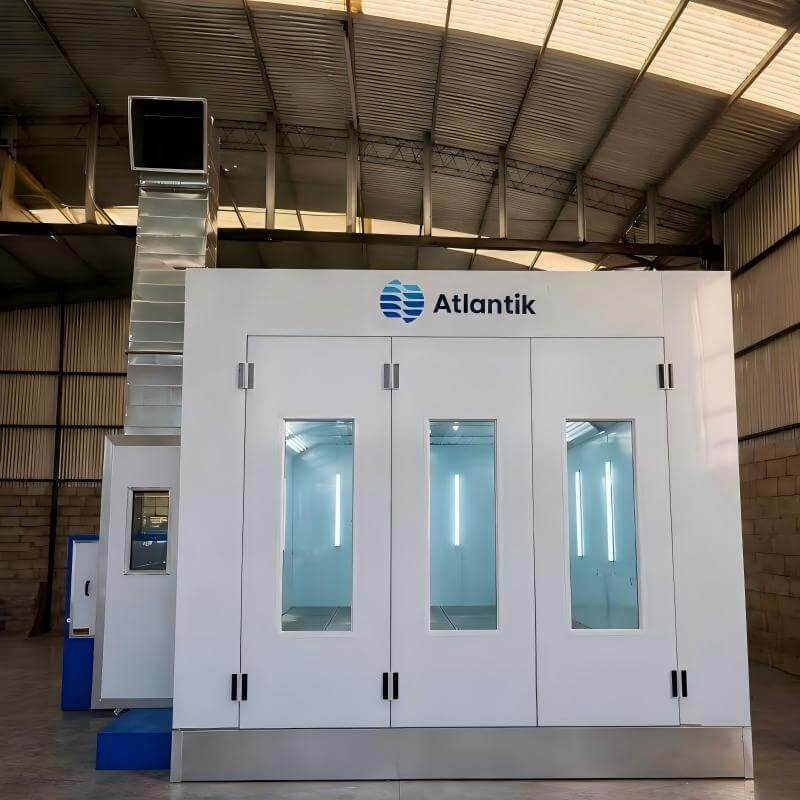
The booth supplied in this configuration measures 1.5m long, 1.2m wide and 1.6m high. That makes it much smaller than a conventional automotive spray booth while still providing enough enclosed working volume for alloy wheel and rim spraying.
For wheel repair shops, tire centers and refinishing businesses, the advantage is straightforward: you gain a more controlled spraying environment without dedicating the floor area required for a full-size vehicle paint booth.
Compact Wheel Spray Booth Specifications
The supplied wheel spray booth has overall equipment dimensions of approximately 1.5 × 1.2 × 1.6m.
Its enclosure is manufactured from 1.2mm galvanized sheet with a sprayed surface treatment.
The system includes an extraction fan to remove paint mist from the working chamber and accordion-style paint filter paper for overspray filtration.
An electronic control system is included for managing the operating functions of the booth.
The configuration can also be specified with an explosion-proof arrangement, while a curing system is available as an optional addition depending on the final application.
These specifications describe the supplied compact wheel painting booth configuration. No specific airflow rate, fan power, filtration grade, curing temperature or certification standard was provided, so those values should not be assumed.
For overseas projects, these details should be confirmed according to the final equipment configuration before an order is placed.
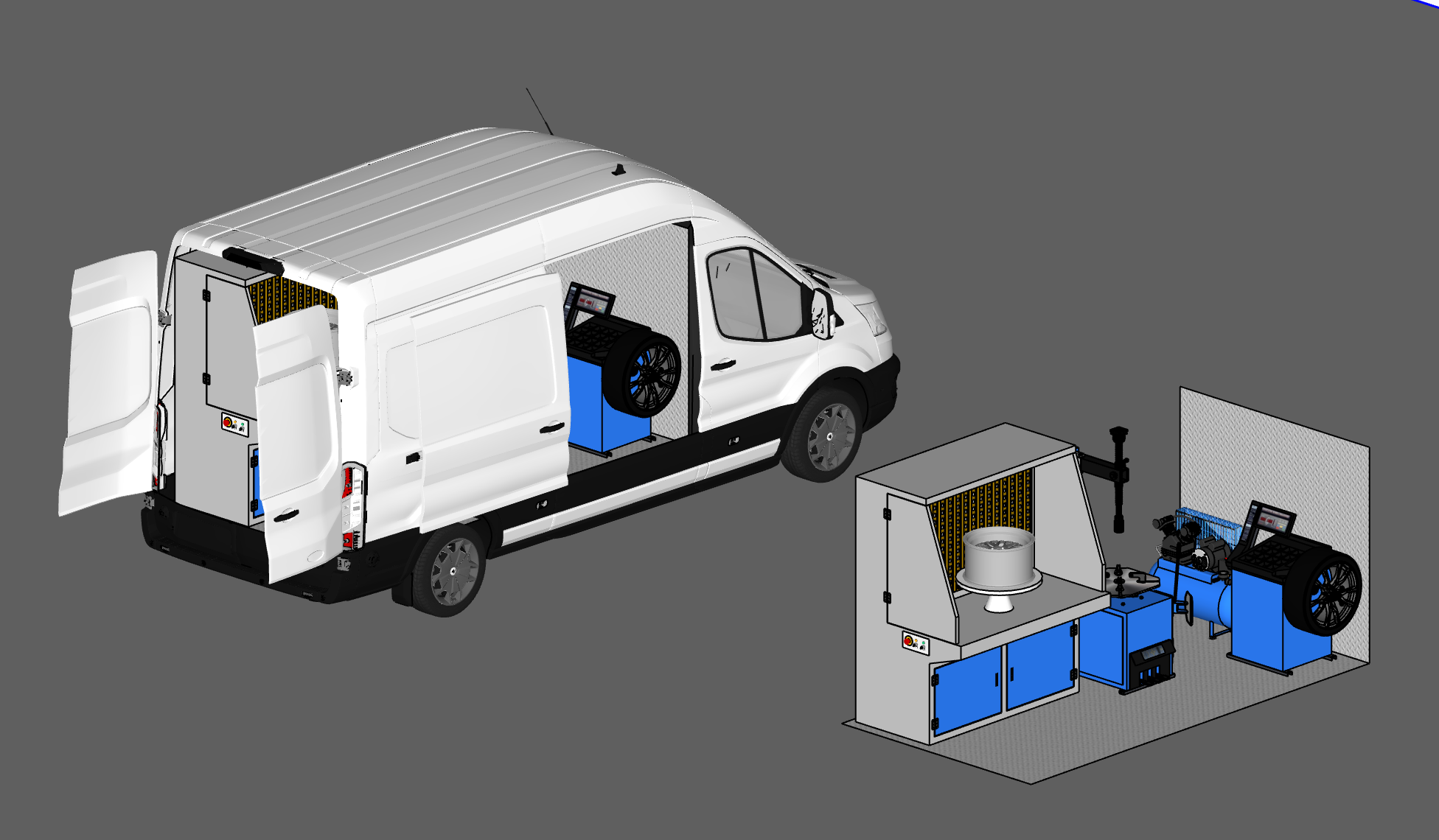
A 1.5 × 1.2 × 1.6m Chamber Keeps Wheel Painting Compact
One of the strongest advantages of a wheel spray booth is that you do not need to occupy a full automotive painting bay every time you refinish a rim.
This booth measures only 1.5m in length, 1.2m in width and 1.6m in height.
That compact footprint allows you to create a dedicated paint area inside workshops where available floor space is limited.
For a wheel repair business, this is important because rim refinishing is normally only one part of the overall workflow.
You may also need space for wheel straightening, tire removal, surface preparation, sanding, powder removal, polishing or curing equipment.
If the spraying stage takes up a large permanent area, the rest of the workshop becomes harder to organize.
A compact rim spray booth helps separate the spraying process without dominating the shop layout.
This makes it especially practical for specialized alloy wheel repair centers, tire service businesses and automotive refinishing workshops that need a dedicated spraying station rather than a complete vehicle booth.
An Enclosed Chamber Helps Reduce Dust Around Fresh Paint
Fresh wheel paint is vulnerable to contamination.
Small particles of sanding dust, workshop debris or airborne material can settle onto a wet coating and leave visible imperfections.
An enclosed spraying chamber helps separate the wheel from surrounding workshop activity while paint is being applied.
This does not mean the chamber automatically becomes completely dust-free under every operating condition.
Final cleanliness still depends on booth maintenance, filter condition, preparation procedures, surrounding workshop cleanliness and how the operator handles the wheel before painting.
The practical advantage is that the wheel is no longer being sprayed directly in an uncontrolled open workshop environment.
For a refinishing technician, that gives you a better starting point for producing a cleaner surface.
The booth should still be cleaned regularly, and accumulated paint residue should not be allowed to build up inside the working chamber.
Good wheel preparation and controlled spraying remain just as important as the enclosure itself.
A Rotary Stand Makes Multi-Angle Rim Spraying Easier
Wheel geometry is one reason rim painting can be more difficult than painting a flat panel.
A typical alloy wheel includes an outer face, spoke edges, recessed sections, inner surfaces and curved transitions.
If you have to repeatedly reposition the wheel manually, it becomes harder to maintain a consistent spraying distance and angle.
A rotary stand helps solve this problem.
By rotating the wheel during the spraying process, you can access different surfaces without repeatedly lifting and repositioning the rim.
This is particularly useful when coating complex spoke designs.
You can move around the wheel more consistently and direct the spray toward areas that might otherwise be difficult to reach.
For the operator, this can make all-side rim spraying more practical and reduce unnecessary handling of freshly prepared components.
The rotary system does not replace good spraying technique, but it gives you a more convenient way to maintain access to different wheel surfaces throughout the coating process.
Paint Mist Extraction Helps Keep the Spraying Area More Controlled
Overspray is unavoidable during spray painting.
Not every paint particle reaches the wheel surface. Some material remains suspended in the air as paint mist.
If that mist is not managed properly, it can accumulate inside the working area, reduce visibility and deposit paint residue on nearby surfaces.
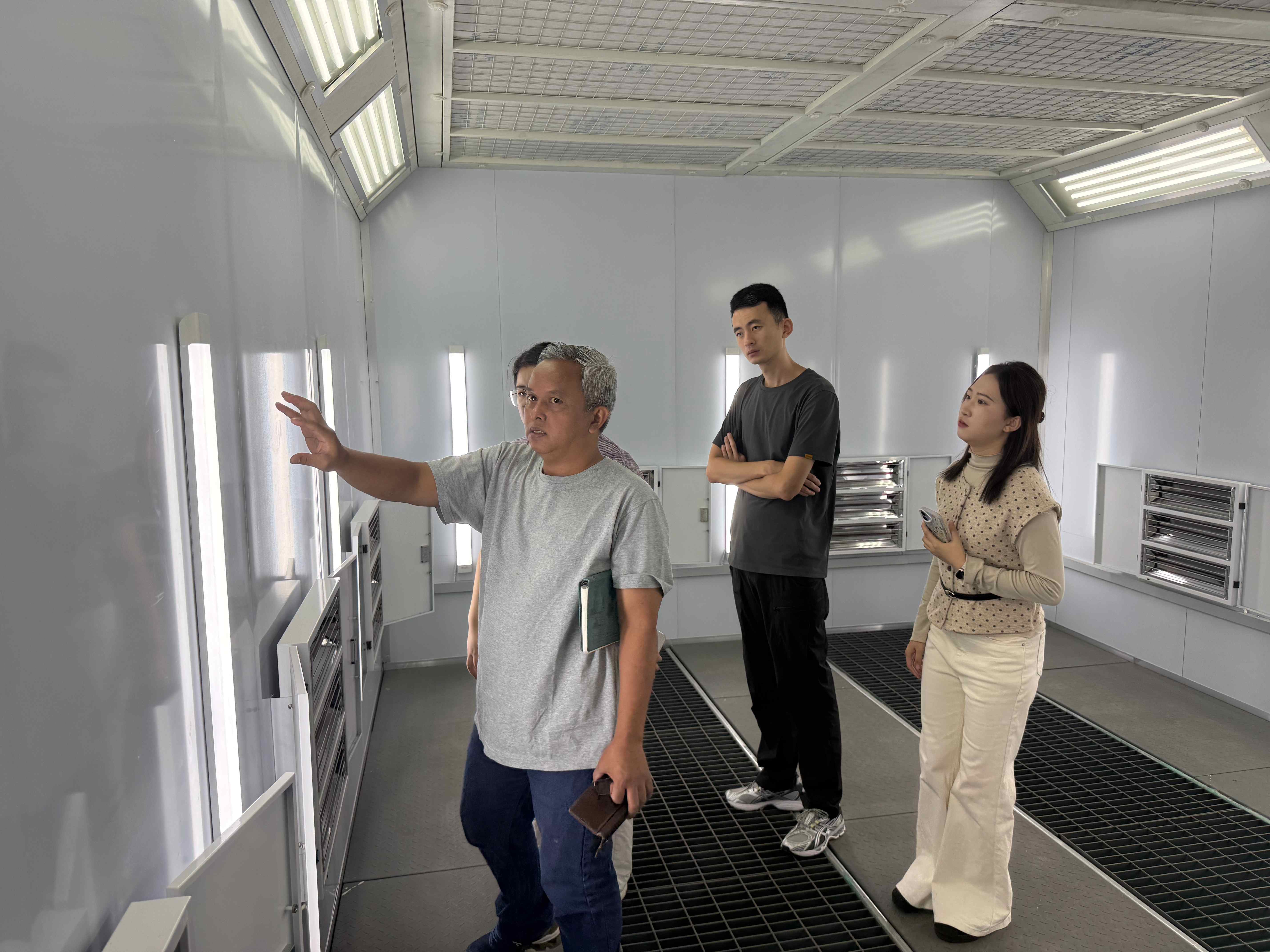
This compact wheel spray booth includes an extraction fan designed to draw contaminated air away from the spraying chamber.
The airflow supports removal of suspended paint mist while the wheel is being coated.
For technicians, this creates a more manageable working environment than spraying in a small enclosed space without dedicated extraction.
However, extraction performance depends on the complete ventilation setup.
The supplied information does not specify the fan power or airflow volume, so those figures should be confirmed if they are important to your application.
Ducting arrangement, filter condition and installation quality can also influence actual performance.
The extraction system should therefore be considered as part of the complete booth design rather than judged only by the presence of a fan.
Accordion-Style Paint Filter Paper Captures Overspray
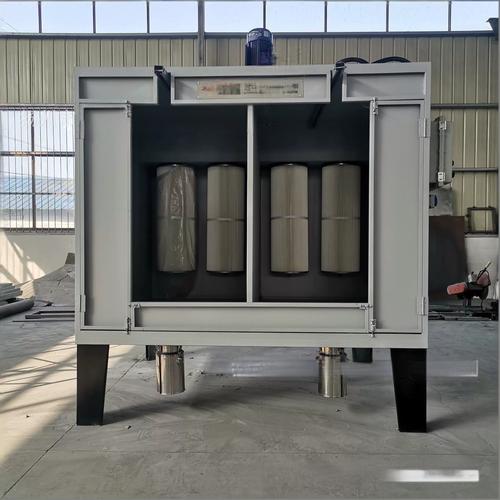
The booth uses accordion-style paint filter paper as part of its paint mist filtration system.
This type of filter provides a large collection surface within a relatively compact space.
As paint-laden air moves through the filter, overspray particles are captured before the air continues through the extraction system.
For wheel painting, this is useful because spraying can generate concentrated overspray within a small chamber.
A suitable filter helps reduce paint accumulation further inside the ventilation system.
The filter is also a consumable component.
Its condition needs to be checked regularly because accumulated paint gradually increases airflow resistance.
If a heavily loaded filter is left in place for too long, extraction performance can decrease.
For workshop operators, filter replacement should therefore be treated as a normal part of spray booth maintenance rather than something carried out only after airflow becomes noticeably poor.
When purchasing the booth, it is practical to confirm replacement filter specifications and spare consumable availability with the supplier.
Galvanized Steel Construction Supports Daily Workshop Use
The booth enclosure uses 1.2mm galvanized sheet with a sprayed surface treatment.
For workshop equipment, material construction matters because the booth is exposed to paint mist, cleaning and regular daily use.
Galvanized sheet provides a practical metal enclosure for the compact booth structure.
The additional surface treatment helps protect the exterior and gives the equipment a finished appearance suitable for a professional workshop.
A rigid metal enclosure also provides a more permanent working chamber than temporary curtains or improvised spray areas.
For a wheel refinishing business, this makes it easier to establish a dedicated spraying station that remains part of the normal production layout.
The enclosure should still be cleaned according to the manufacturer's recommendations.
Paint deposits should not be allowed to accumulate excessively on interior surfaces, especially around ventilation and filtration areas.
Regular cleaning helps maintain a more consistent spraying environment and makes inspection of the equipment easier.
A Compact Modular Structure Simplifies Workshop Planning
Installing a conventional vehicle spray booth can require a large area, extensive ducting and significant preparation of the building.
A wheel spray booth operates on a much smaller scale.
Its compact modular structure allows the equipment to fit into workshops that would not have enough available space for another full-size booth.
This can be particularly useful if wheel refinishing is an additional service rather than the main activity of the business.
You can create a dedicated wheel painting position without redesigning the entire workshop.
A modular structure can also simplify assembly and installation compared with a much larger automotive booth.
That does not mean installation requirements should be ignored.
The extraction route, electrical supply, working clearance and any optional curing or explosion-proof components still need to be planned before the equipment is positioned.
For importers and distributors, asking the end user for workshop dimensions and preferred installation location before quotation can help determine whether the compact booth fits the available space.
Electronic Controls Make Daily Operation More Convenient
The supplied configuration includes an electronic control system.
Centralized controls allow the operator to manage the main booth functions from a dedicated control point.
For a small wheel refinishing station, uncomplicated operation is valuable.
Technicians may move frequently between surface preparation, spraying and other wheel repair tasks, so the booth should be easy to incorporate into that workflow.
The electronic control system also gives the equipment a more integrated operating arrangement than using separate independent switches for individual components.
The exact control functions can vary depending on the final configuration.
If options such as curing or explosion-proof components are added, you should confirm how these functions are integrated into the control system before ordering.
The final electrical specification should also be checked against the destination workshop's local power supply.
Optional Explosion-Proof Configuration Should Match the Paint Process
The product configuration can be supplied with an optional explosion-proof arrangement.
This is an important consideration when working with flammable coatings, solvents or vapors.
However, “explosion-proof configuration” should not automatically be interpreted as certification to a particular international standard.
The supplied information does not state an ATEX, IECEx, UL or other specific explosion-protection certification.
If your workshop, local authority or destination market requires certified explosion-proof electrical components, the exact standard and documentation should be confirmed before ordering.
The paint system also matters.
Different coatings and solvents can have different ventilation, electrical and fire-safety requirements.
For a professional buyer, it is better to define the coating materials first and then specify the appropriate booth configuration than to assume one electrical setup is suitable for every refinishing process.
An Optional Curing System Can Extend the Wheel Refinishing Workflow
A curing system is available as an optional configuration.
This can be useful if you want to integrate more of the coating process into the same wheel refinishing station.
After spraying, controlled heating may help move the coating into its required drying or curing stage, depending on the paint system being used.
The appropriate curing temperature and time depend on the coating manufacturer's requirements.
Because the supplied technical information does not include curing temperature, heater power or heating method, these values should be confirmed separately when choosing this option.
You should also make sure the curing system is compatible with the coatings used in your workshop.
For businesses processing a regular volume of wheels, combining spraying and optional curing functions can help create a more organized workflow.
For lower-volume operations, a separate drying method may be sufficient.
The right configuration depends on your actual production process rather than simply adding every available option.
Where Does a Compact Rim Spray Booth Fit Best?
This type of booth is designed for component refinishing rather than whole-vehicle painting.
It is particularly relevant for alloy wheel refurbishment businesses, automotive detailing and refinishing shops, tire centers that offer wheel repair, and body shops that want a dedicated rim painting area.
Its main advantage is specialization.
Instead of occupying a large spray booth every time one or several wheels need refinishing, you can use a smaller station designed around the dimensions of the component.
That can help keep the main automotive paint booth available for vehicle bodywork while wheel jobs move through a separate workflow.
For specialist wheel businesses, the booth can become the main spraying station around which preparation and finishing areas are organized.
Its value therefore comes from matching the equipment size to the actual job rather than using oversized equipment for a relatively small component.
What Should You Confirm Before Ordering a Wheel Spray Booth?
Start with the wheel refinishing process you actually use.
Confirm the typical wheel sizes, paint materials, daily production volume and whether you need only spraying or both spraying and curing.
Then check whether the 1.5 × 1.2 × 1.6m equipment size fits the intended workshop location with enough additional space for operator movement, ventilation connections and maintenance access.
The extraction system and filter consumables should also be confirmed, particularly if you need specific airflow performance.
If you require an explosion-proof configuration, specify the exact safety standard required by your market rather than relying only on the general description.
If a curing option is needed, confirm the heating method, working temperature, control system and electrical requirements before production.
You should also request final installation drawings, electrical information, filter specifications, maintenance instructions, spare-parts information and warranty conditions.
No specific CE, ATEX, IECEx, UL or other certification was included in the supplied product information. Any required certification or conformity documentation should therefore be verified separately before ordering.
FAQ
What is a wheel spray booth used for?
A wheel spray booth provides an enclosed working chamber for spraying alloy wheels and rims. It helps separate wheel painting from surrounding workshop activity while using extraction and filtration to manage paint mist.
How large is this compact wheel spray booth?
The supplied equipment dimensions are approximately 1.5m long, 1.2m wide and 1.6m high. Its compact size makes it suitable for dedicated wheel refinishing areas where a full automotive spray booth would be unnecessarily large.
How does the booth remove paint mist?
The booth includes an extraction fan and accordion-style paint filter paper. The fan draws paint-laden air away from the spraying area while the filter captures overspray particles. Actual airflow performance depends on the final fan and installation configuration.
Can the wheel spray booth include curing and explosion-proof options?
Yes. An explosion-proof configuration and curing system are available as options. The exact specifications and any required certification should be confirmed according to the coating process, workshop conditions and destination-market requirements.
Conclusion
This compact wheel spray booth combines a 1.5 × 1.2 × 1.6m working structure, 1.2mm galvanized sheet construction, paint mist extraction, accordion-style filtration and electronic controls in a dedicated rim refinishing station. A rotary stand supports multi-angle wheel spraying, while optional explosion-proof and curing configurations allow the equipment to be adapted to different coating processes.
For alloy wheel repair shops, tire service businesses and automotive refinishing workshops, the main advantage is having a separate, space-efficient area for wheel painting rather than using an open workshop or occupying a full-size vehicle spray booth. Before ordering, the wheel range, coating materials, extraction requirements, filter consumables, electrical configuration and optional curing or explosion-proof system should all be matched to your actual production process.