
What Makes a 4000kg Scissor Car Lift Practical for Daily Service?
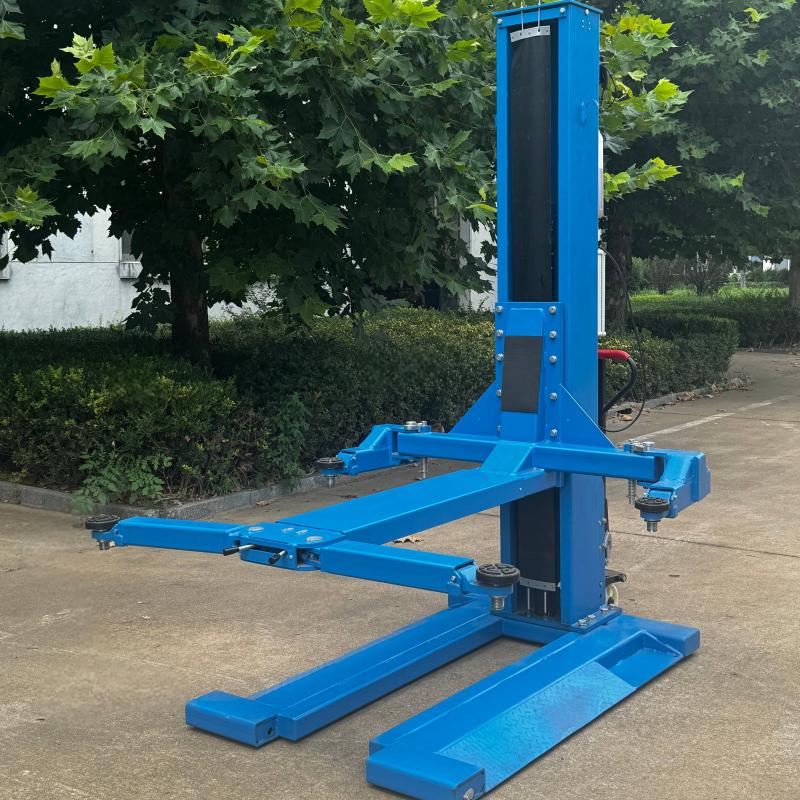
When your workshop needs better access for tire service, oil changes, and chassis inspection without installing a full-height vehicle lift, a mid-rise scissor lift can be a practical option. The AX-3000P provides a 4000kg lifting capacity, 1200mm lifting height, and compact 1200 × 520mm platforms for everyday automotive service.
Why Use a 1200mm Scissor Car Lift in a Workshop?
Not every repair job requires raising a vehicle nearly two meters off the floor.
For tire replacement, brake work, oil changes, and routine chassis inspection, a 1200mm lifting height provides enough working access while keeping the equipment compact.
The AX-3000P is designed around this type of daily service.
Its scissor mechanism remains underneath the vehicle rather than relying on permanent columns on both sides of the service bay. This can make the working area easier to organize, especially if you want to preserve open space around the vehicle.
For smaller and medium-sized workshops, this layout can be useful when the same bay needs to handle several different jobs throughout the day.
You can raise a vehicle to a comfortable intermediate working height, complete the necessary service, and return the bay to normal use without the larger footprint associated with some multi-column lifting systems.
AX-3000P Scissor Car Lift Specifications
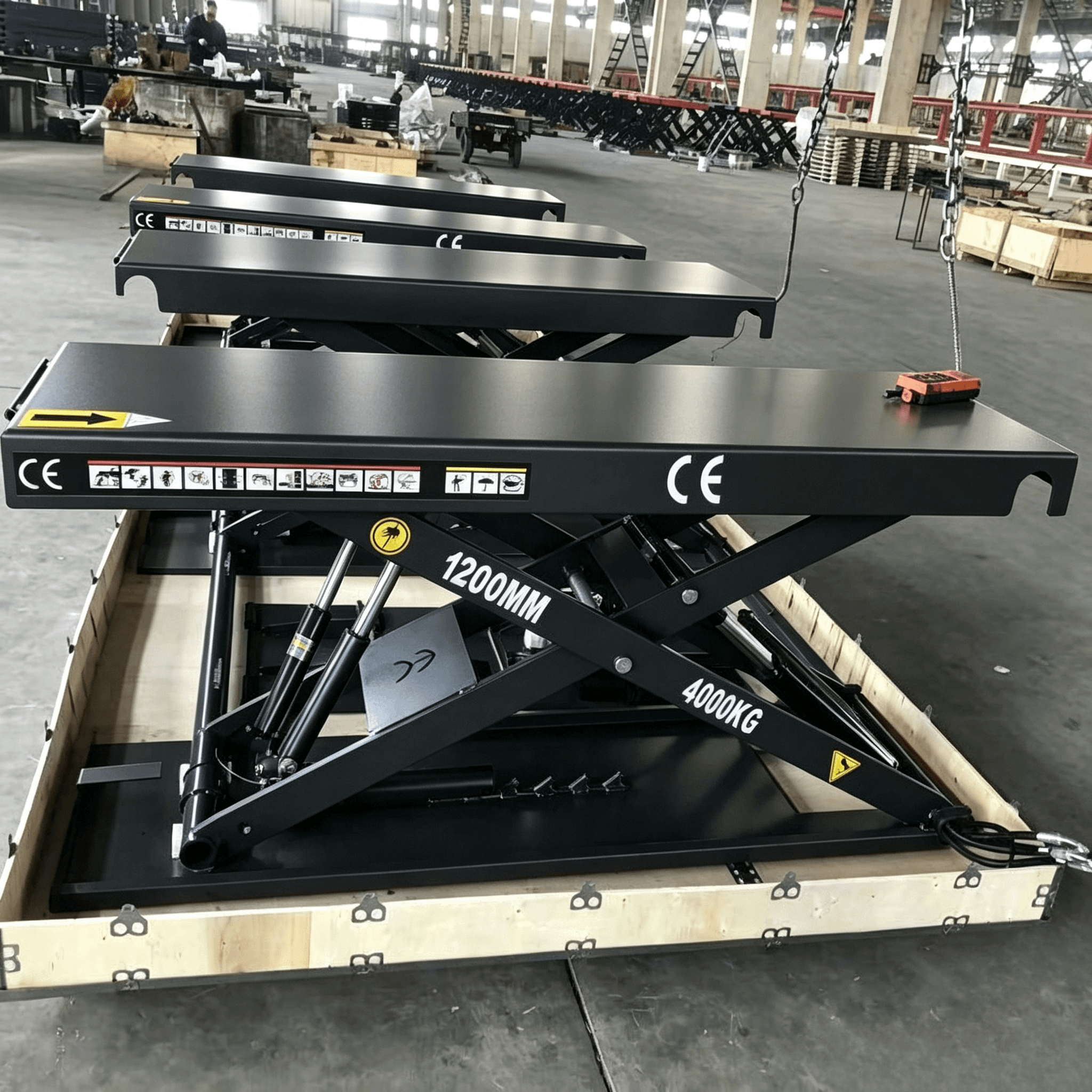
The AX-3000P has a rated lifting capacity of 4000kg. The platform length is 1200mm and the platform width is 520mm. The maximum lifting height is 1200mm, while the stated lifting time is 30–50 seconds.
The lift is powered by a 2.2kW motor. The supplied electrical configuration is 220 V, 50 Hz, optional single-phase.
The system includes mechanical safety locks, an anti-fall valve, and overload protection. It uses hydraulic power for lifting and lowering and is designed for smooth movement with relatively low operating noise.
The model designation AX-3000P should not be confused with its rated capacity. Based on the supplied specification, this configuration is rated at 4000kg.
Before placing a vehicle on the lift, you should still check its actual weight, lifting points, center of gravity and dimensions rather than relying only on the maximum capacity figure.
A 4000kg Capacity Gives You a Useful Service Range
The rated lifting capacity of 4000kg gives the AX-3000P a broader working range than many light-duty workshop lifts.
For a repair shop, this means the equipment can accommodate compatible sedans, SUVs, and light vehicles within the stated load limit.
That makes it suitable for workshops where the vehicle mix changes regularly.
One customer may bring in a compact sedan for tire service, while the next vehicle may be a heavier SUV requiring brake inspection or an oil change. A 4000kg capacity gives you more flexibility without immediately moving to a larger full-rise lift.
However, capacity alone does not determine vehicle compatibility.
A vehicle weighing less than 4000kg may still require additional checks if its lifting points do not match the platform layout or if its weight distribution creates an unsuitable loading condition.
You should always position the vehicle according to the manufacturer's lifting requirements and make sure the load is balanced correctly before raising it.
This is particularly important with longer or heavier vehicles where the center of gravity may not be located near the center of the lift.
The 1200mm Lifting Height Fits Common Maintenance Work
The AX-3000P raises the vehicle to a maximum height of 1200mm.
This is lower than a full-rise vehicle lift, but that does not make it less useful for the jobs it is designed to handle.
For tire work, you mainly need the wheels raised to a comfortable service position.
For oil changes, a mid-rise height can give you easier access to the lower engine and chassis area.
For brake inspection and suspension-related service, the 1200mm working height also allows the technician to reach the wheel assemblies without constantly working close to floor level.
The same height can be useful for visual chassis inspections where full standing access beneath the vehicle is not necessary.
For many routine jobs, lifting only as high as required can also make the service process more straightforward.
Instead of using a larger lift for every vehicle, you can dedicate the AX-3000P to common fast-service work and reserve full-height equipment for repairs that genuinely require more underbody clearance.
Compact Platforms Help Keep the Lift Structure Small
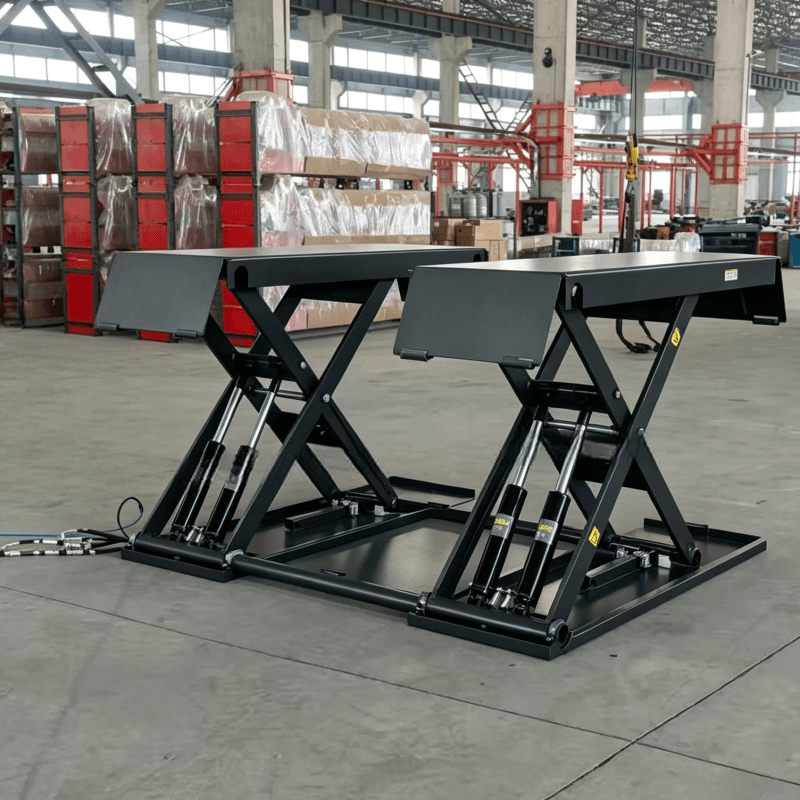
Each platform measures 1200mm in length and 520mm in width.
This compact platform configuration is one reason the AX-3000P can maintain a relatively small footprint compared with larger platform lifts.
The platform dimensions need to be matched carefully to the vehicle lifting area.
Unlike a four-post lift where the vehicle wheels remain supported on long runways, this type of scissor lift supports the vehicle through the appropriate lifting areas.
Correct positioning therefore matters.
Before lifting, your operator should confirm that the vehicle is centered correctly and that the intended contact areas are fully supported.
For distributors and workshop owners, platform size is an important specification to check against the types of vehicles commonly serviced.
A compact platform can save space, but it should still provide the correct contact area for the vehicle range you intend to handle.
Surface-Mounted or Recessed Installation Gives You More Layout Options
One practical advantage of this scissor car lift is the option to install it on the surface or recess it into the workshop floor.
A surface-mounted installation is generally easier when you are adding the lift to an existing workshop and do not want to modify the floor extensively.
The lift remains above floor level, which can simplify initial installation.
A recessed installation places more of the lifting structure into the floor.
When properly designed, this creates a cleaner service bay and reduces the amount of equipment projecting above the workshop surface when the lift is lowered.
For a busy garage, that can make vehicle movement and general workshop organization easier.
The right installation method depends on your building, foundation conditions, and long-term workshop plan.
If you expect to reorganize the service area later, a surface installation may provide more flexibility.
If you are building a dedicated bay and want a cleaner floor layout, recessed installation may be worth considering.
In either case, the final foundation and installation requirements should be confirmed from the manufacturer's technical drawings before construction work begins.
Mechanical Safety Locks Support Secure Daily Operation
A hydraulic lifting system should always be supported by appropriate mechanical safety measures.
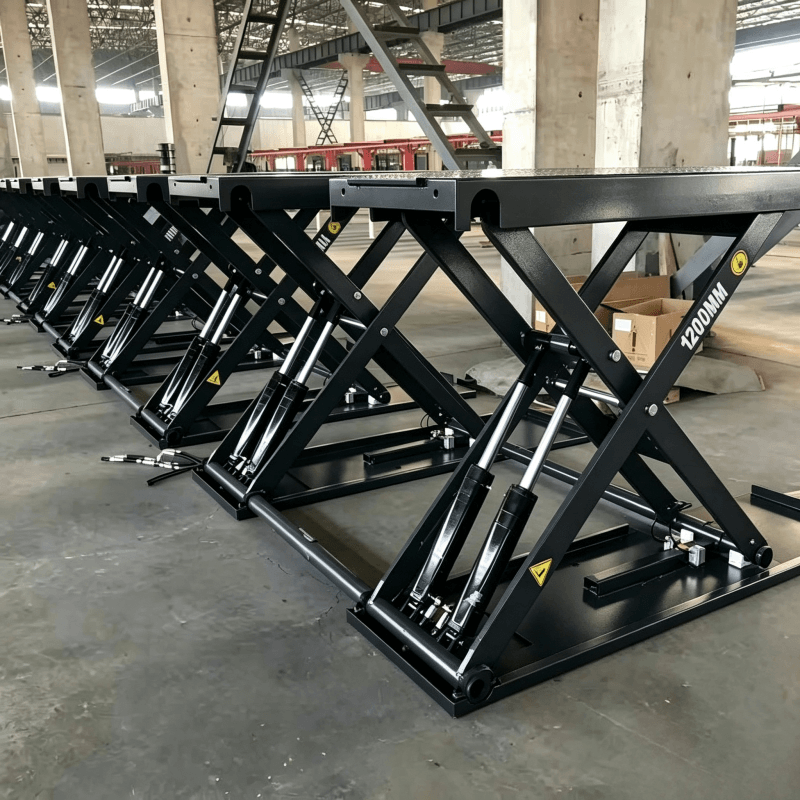
The AX-3000P includes mechanical safety locks, an anti-fall valve, and overload protection.
The mechanical safety lock provides an additional holding function when the vehicle is raised.
The anti-fall valve is intended to reduce the risk of uncontrolled downward movement if the hydraulic system experiences a problem.
Overload protection helps prevent the lift from being operated beyond its intended capacity.
These functions are important, but they do not replace correct operating procedures.
Before working around or beneath a raised vehicle, the operator should make sure the vehicle is positioned correctly and that the mechanical locking system is engaged as intended.
The safety system should also be inspected regularly.
Wear, contamination, poor adjustment, or lack of maintenance can affect how mechanical and hydraulic safety components operate.
For a commercial workshop, routine inspection should be treated as part of normal equipment management rather than something carried out only after a fault appears.
Smooth Hydraulic Movement Helps Technicians Work More Comfortably
The AX-3000P uses hydraulic power to raise and lower the vehicle.
A properly maintained hydraulic system provides steady movement and allows the lift to operate without the abrupt motion that can make vehicle positioning uncomfortable.
Smooth lifting is particularly useful when technicians use the equipment several times throughout the working day.
The product configuration is also designed for relatively low operating noise.
That can be helpful in smaller indoor garages where equipment noise becomes more noticeable because work areas are close together.
Hydraulic performance depends heavily on maintenance.
Oil condition, seals, hoses, cylinders, and related components should be inspected according to the manufacturer's maintenance requirements.
If the lift begins moving unevenly, lowering unusually quickly, or producing unfamiliar noise, it should be checked before normal use continues.
Consistent movement is not only about comfort. It can also provide an early indication that the hydraulic system is functioning correctly.
A 30–50 Second Lifting Time Fits Routine Service Work
The stated lifting time for the AX-3000P is 30–50 seconds.
For routine maintenance, this provides a practical operating speed without making lifting performance the main focus of the equipment.
A service lift may be raised and lowered several times during a normal working day.
If each cycle takes too long, those small delays can gradually affect workflow.
At the same time, stable and controlled movement is more important than simply achieving the shortest possible lifting time.
The actual lifting cycle can vary depending on vehicle weight, hydraulic condition, ambient temperature, electrical supply and maintenance status.
For this reason, the 30–50 second figure should be viewed as the stated operating range rather than a guaranteed time under every condition.
For workshop planning, it is a useful reference for understanding how the equipment fits into routine service work.
A 2.2kW Motor Keeps the Electrical Configuration Practical
The lift uses a 2.2kW motor.
The supplied electrical specification is 220V, 50Hz optional, single-phase.
For many workshops, a single-phase configuration can be easier to integrate than larger three-phase equipment, depending on the local electrical infrastructure.
You should still confirm the final power configuration before manufacturing or shipment.
Voltage and frequency standards vary between markets.
Your installation site also needs appropriate wiring, grounding, circuit protection, and electrical capacity to operate the motor safely.
Importers should not assume that a 220V supply alone guarantees compatibility.
The complete electrical configuration needs to be matched to the destination market and the workshop's existing electrical system.
Confirming this information before shipment can prevent unnecessary electrical modifications during installation.
The Low-Profile Scissor Layout Helps Save Workshop Space
Space efficiency is one of the main reasons workshops consider a scissor car lift.
Because the lifting structure is concentrated underneath the vehicle, you do not need permanent columns on either side of the bay.
That leaves the surrounding area relatively open.
Technicians can move around the vehicle more easily, and equipment such as tire tools, drain containers, or service carts can be positioned based on the job being performed.
For a workshop with several bays, this can also make the overall floor plan more flexible.
The lift is especially suitable for service areas where you want lifting capability but do not want large vertical columns affecting vehicle movement or visibility.
If the lift is installed in a recessed configuration, the floor area can remain even cleaner when the equipment is fully lowered.
This makes the AX-3000P relevant not only for conventional repair shops but also for quick-service bays where open floor space is important.
Simple Operation Helps Reduce Daily Training Requirements
The AX-3000P is designed around straightforward operation.
For a workshop where several technicians use the same lift, simple controls can reduce unnecessary complexity.
Operators still need proper training, but they do not need to manage a complicated sequence for basic raising and lowering.
This is useful for tire shops and general repair businesses where equipment needs to fit naturally into a fast-moving service routine.
Simple operation can also make daily checks easier.
Technicians quickly become familiar with the normal sound, speed, and movement of the lift.
If something changes, they are more likely to notice it.
That could include unusual hydraulic noise, slower lifting, uneven movement, or changes in the operation of the safety lock.
Early identification of these changes can help prevent a minor maintenance issue from becoming a larger equipment problem.
Fewer Wearing Parts Can Simplify Maintenance
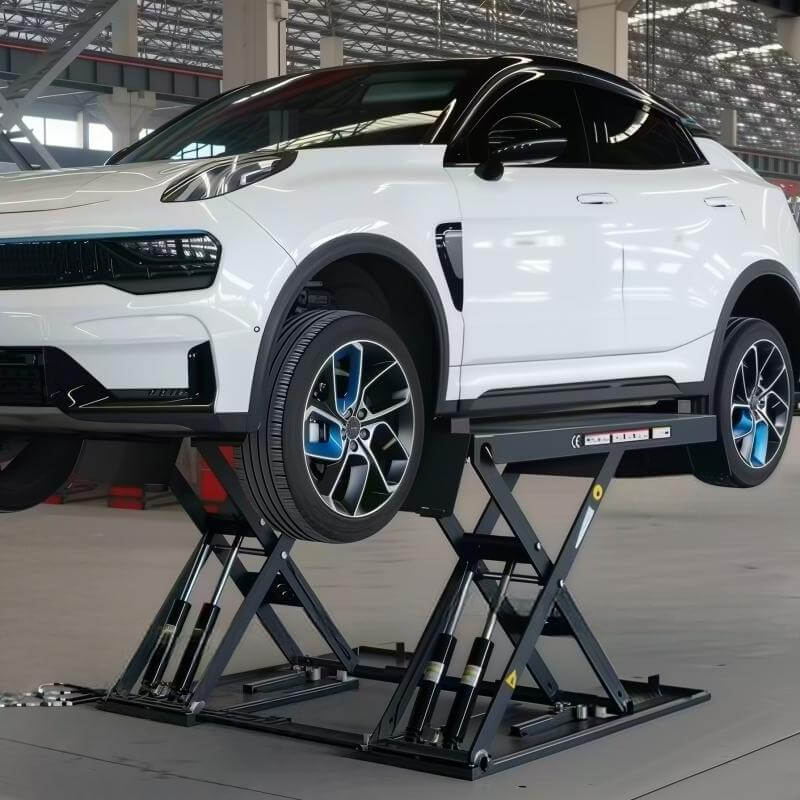
The product is designed with relatively few wearing components compared with more complicated lifting systems.
This can make routine maintenance easier to manage.
The hydraulic system, mechanical locks, anti-fall valve, electrical components, pivot points, and platform structure should still be checked regularly.
Moving joints should be inspected for wear, while hydraulic components should be monitored for leakage or changes in performance.
Keeping the lift clean also matters.
Oil, dust and workshop debris can make it harder to identify leaks or damaged components during daily inspections.
A low-maintenance design does not mean maintenance-free operation.
The actual service requirement depends on how often the lift is used and the environment in which it operates.
A lift working continuously in a busy tire or repair shop will naturally need more attention than one used only several times each week.
What Should You Check Before Ordering the AX-3000P?
Start with the vehicles you plan to service.
Confirm that their weight, dimensions, lifting points, and load distribution are compatible with the 4000kg rated capacity and the 1200 × 520mm platform dimensions.
Then decide whether surface-mounted or recessed installation better suits your workshop.
If recessed installation is planned, the foundation and pit dimensions should be confirmed from the final technical drawing before construction.
You should also verify the required power supply.
The supplied configuration states a 2.2kW motor with 220V, 50Hz optional, single-phase power.
Before shipment, ask for the final installation instructions, electrical requirements, operating manual, maintenance guidance, spare-parts information, and warranty conditions.
No CE, UL, ETL, or other specific product certification was included in the supplied information for this AX-3000P configuration.
If certification or conformity documentation is required in your destination market, confirm its availability separately before placing the order.
Frequently Asked Questions
What is the lifting capacity of the AX-3000P scissor car lift?
The supplied AX-3000P configuration has a rated lifting capacity of 4000kg. Compatible vehicle dimensions, lifting points and weight distribution should also be checked before lifting.
How high can the AX-3000P raise a vehicle?
The maximum lifting height is 1200mm. This height is suitable for common work such as tire service, brake maintenance, oil changes, and routine chassis inspection.
Can the AX-3000P be installed flush with the workshop floor?
Yes. The lift can be configured for recessed installation or used as a surface-mounted scissor lift. Final installation and foundation requirements should be confirmed before preparing the site.
What power supply does the AX-3000P use?
The supplied specification uses a 2.2kW motor with 220V, 50Hz optional, single-phase power. The final electrical configuration should be confirmed against your local workshop supply before shipment.
Conclusion
The AX-3000P scissor car lift combines a 4000kg rated lifting capacity, 1200mm lifting height, 1200 × 520mm platforms, 30–50 second lifting time and a 2.2kW hydraulic power system in a compact workshop configuration.
Its mid-rise design is particularly practical for tire service, brake maintenance, oil changes, and routine chassis inspection where a full-height lift is not always necessary. Surface-mounted and recessed installation options also give you more flexibility when planning workshop floor space.
Before ordering, the 4000kg capacity, platform dimensions, vehicle lifting points, installation method, electrical supply, and workshop foundation should all be matched to your actual service conditions. This gives you a more reliable basis for choosing a compact scissor car lift that fits both your vehicle range and daily maintenance workflow.